Language and Mystery

Most people have a favourite psalm or psalms, perhaps one that they have become familiar with at some special moment in their life, or that means a lot to them for some other reason. For many people it might be Psalm 23, just because it’s one of the shortest and best-known. When I was at primary school, many years ago, it was one of the pieces of verse we were encouraged to learn in our English class. (I never learned it: even at the age of 10, I was the bolshy child who wants to learn ‘A Poem of Your Own Choice’, rather than one that the teacher had chosen for us.) Or it might be Psalm 139, at some moment in our lives when it’s especially important for us to learn that God knows us intimately, and values us:

I praise you, for I am fearfully and wonderfully made. Wonderful are your works; my soul knows it very well. My frame was not hidden from you, when I was being made in secret, intricately woven in the depths of the earth. Your eyes saw my unformed substance; in your book were written, every one of them, the days that were formed for me, when as yet there was none of them. (verses 14-16, ESV)

My ambition is to get to know all the psalms so well, that they are all my favourites for their own unique reason. In the meantime, there are lots that stand out for me. One of the recent additions to my ‘list of favourite psalms’ is Psalm 85. For a number of years, I would say Evening Prayer on Christmas Day, using the Book of Common Prayer order for Evening Prayer. The traditional lectionary lists Psalm 85 as one of the psalms appointed for the day, and I came to love the verses which explain that, in the coming of Christ into the world, God’s mercy was satisfied, and God’s righteousness and justice also.

For his salvation is nigh them that fear him:
that glory may dwell in our land.
Mercy and truth are met together:
righteousness and peace have kissed each other. (verses 9-10)

Whenever I say Psalm 85 in the daily course of psalms, it reminds me of that message about the Incarnation. So I have a great affection and concern for these words. Imagine my dismay, then, when I find that the Psalter used in Common Worship Daily Prayer, and the translation that appears in the New Revised Standard Version, reads

9 Truly, his salvation is near to those who fear him, *
that his glory may dwell in our land.
10 Mercy and truth are met together, *
righteousness and peace have kissed each other;

Where has that his come from? How has it crept in before the word ‘glory’, when my guess is, it’s not present in the Hebrew? And why does it make such a difference to me, and grate so, and feel that it has taken something away from the meaning of the line?

It’s because there is something about modern translation – in the Bible and in liturgy, too – that wants to over-specify, over-define. By making it crystal clear, what it wants you to understand by the words, it takes away ambiguity, and the possibility of reading different things in the text, from what the translators want you to read. This impoverishes Scripture and liturgy, where it is often the ambiguity of a phrase, its ability to bear many possible shades of meaning, that leads the reader or the worshipper deeper into the meaning and reality of God.

Thomas Cranmer, and the translators of the King James Bible, often had a better sense of this. It wasn’t that they didn’t know the different meanings: what they knew was, that if there were several possible meanings, it wasn’t their job to define any single one as the meaning

Clearly, language is supposed to communicate meaning; but if the meaning of a thing is mystery, then it is mystery that the language ought to convey. That’s one of the reasons why I find some of the more traditional formularies of liturgy and hymnology so much more satisfying than modern attempts to update them.

Impossible Gestures in Worship

Somewhere I remember reading an account of an earnest young curate who caused amusement to his congregation by exhorting them: “Let us take our hearts and look them in the face.”

Apparently this kind of spiritual contortion has now become part of the vocabulary of modern worship songs, too. Today I found myself being invited to sing

All who are thirsty,
all who are weak,
come to the fountain,
dip your heart in the stream of life…

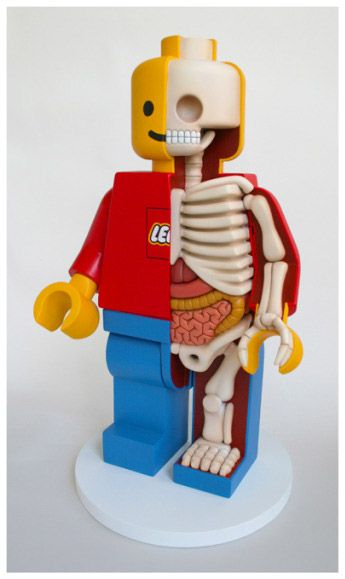
Google Images unfortunately couldn’t find an illustration of this startling feat, so this will have to do instead:

The Shame of American Evangelicalism

Shane Claiborne interviewed in the Church Times, talking about Christianity in the USA:

Evangelicals own more guns than the general population, and 85 per cent of executions happen in the Bible belt. They can be pro-guns, pro-death penalty, pro-military . . . and still say they’re pro-life, because they’re against abortion. For me, being pro-life means ending gun violence, caring for creation, welcoming immigrants, opposing war, declaring that black lives matter, and abolishing the death penalty.

Like he says, they’ve gone a long way from the spirit and the teaching of the guy they call ‘Lord’ and claim to follow.

A Wedding from Hell

I had one of those dreams that clergy have — even retired ones, it turns out. Forgetting my vow that I would never do it again, I had agreed to conduct a wedding. And like all dream weddings, everything that could possibly go wrong was going wrong.

It was a church I didn’t know. We were conducting the marriage outside the church door, in the very ancient traditional manner. But because the path from the church door to the car park was a long one, all the guests were standing around in the distant car park, and none of them could be persuaded to come any nearer.

Then there was the trouble with the kitten. So I tied a soft toy to a piece of string to distract it; the kitten leaped at it and held fast and was hoisted to the top of the vestry cupboard, about seven feet off the ground, where it stood for a moment in terror before launching itself off and jumping to the ground.

Don’t even get me started on the problems I was having finding the service books. Surely a church where I had been invited to conduct a wedding would have copies of the service? Surely someone would have thought to put them out? Apparently not. It seems highly likely that in this scenario the organist would not have turned up, the marriage registers would be nowhere to be found, the bridesmaids (or even the bride) would throw up in front of me…

But not waiting to find out, I woke up. Wondering how to persuade my Dream Self to take the same vow as Waking Self. And to keep it, too.

A celebration of the female pudenda

The latest edition of New Statesman contains a review of The Cambridge History of Welsh Literature, edited by Geraint Evans and Helen Fulton, published by Cambridge University Press at an eye-watering £100. I might perhaps not have read the review, since I’m unlikely to read the book even if some rich benefactor stumped up the price, except that its author is Rowan Williams.

He has clearly read and assimilated the 854 pages of this volume, and knows the subject thoroughly enough to comment on the chapters, gently suggest improvements that might have been made, and list a number of factual and proof-reading errors. I couldn’t possibly argue with any of that.

But what particularly enchanted me was his comment on one of the most regrettable lacunae of the book.

“Strangely, even scandalously, given the justifiable stress on the significance of women writers in the last century or so, there is nothing at all (beyond a single mention of her name) about the greatest of medieval Welsh women poets, the 15th century Gwerful Mechain, author of a delightfully uninhibited celebration of the female pudenda as well as a number of other verses on those primary poetic data, the natural world, eros and God.”

(I’ve researched and added the links for the benefit of those who don’t believe him.)

The former Archbishop’s erudition is beyond amazing; it’s terrifying. Is there anything this man doesn’t know?

False sisters?

We’ve spent this week in Salisbury, staying in Sarum College right in the Cathedral Close. It’s a place I could bear to live, if only I were a millionaire or a former Conservative Prime Minister (Ted Heath had a house here.) The joy of it all is to be able to share in Morning and Evening Prayer, together with a daily Eucharist, in a place of such aweful holiness.

But even holiness has its merry moments that make me smile. Like this morning’s reading from St Paul’s second letter to the Corinthians, where he’s going on about his qualifications as an apostle: namely, that he’s suffered so much more than all the self-proclaimed apostles who criticise or oppose him.

He boasts: “Five times I have received from the Jews the forty lashes minus one. Three times I was beaten with rods. Once I received a stoning. Three times I was shipwrecked; for a night and a day I was adrift at sea; on frequent journeys, in danger from rivers, danger from bandits, danger from my own people, danger from Gentiles, danger in the city, danger in the wilderness, danger at sea, danger from false brothers and sisters; in toil and hardship, through many a sleepless night, hungry and thirsty, often without food, cold and naked.” (2 Corinthians 11.24-27 NRSV)

Danger from false brothers and sisters? The Greek word translated thus is ψευδαδέλφοις – meaning pseudo-brethren or ‘false brethren’ in the KJV. I can only think the NRSV’s version is its inclusive language policy carried to absurd lengths: I can’t imagine that many of the dangers Paul faced were caused by women (pace The Life of Brian). But that didn’t stop my imagine wanting to discover the story behind these wicked women, these false sisters, who caused the saint such trouble.

Perhaps there’s an idea there for next NaNoWriMo?

Politics and I Ching

易經

I’ve been fascinated by the I Ching for more years than I can remember. Maybe it’s having lived through the 60s and Flower Power and all that stuff, and being intrigued by some of the artistic, literary, and psychological associations like Hermann Hesse, George Harrison, and Jung; but I didn’t start looking at it more seriously until the 1990s. Since then I’ve kept taking it up and putting it down again, frustrated by its opaqueness and, quite simply, its foreignness.

And still I come back to it, and have a modest collection of different translations and books about it. I’m attracted to it not as a book of divination… who really wants to know what will happen, especially at this moment in history? It will be bad enough to find out when it actually happens. No, what appeals to me is the sense that it speaks with a voice of wisdom, a very different kind of wisdom from what we’re familiar with in the West, although often saying many of the same kind of things. It has a lot to say about how to develop moral character and right behaviour: how to study to become a better person; and I like that.

But still, much of what you find about it in books or on the Internet seems either mad, or unnecessarily esoteric, or alternatively just plain trivial. What has changed in the most recent time, has been coming across the idea that I might actually read it. (I know, I’m slow on the uptake… But the Changes don’t reveal their deep secrets to the person in a hurry. I think.)

Thomas Cleary, in The Taoist I Ching, insists that you cannot make any sense of this book, if you have only a limited knowledge of it, and this is especially true of any random approach (such as, only reading the hexagrams that result from some random process, whether counting yarrow stalks or tossing coins).

“Therefore, the first step is to read the book in its entirety, without pausing to judge or question, just going along with the flow of its images and ideas. … Ancient literature suggests reading one hexagram in the morning and one at night. At this rate, this initial phase of consultation can be completed in approximately one month. This may have to be repeated one or more times at intervals to effectively set the basic program into the mind.”

In fact, on this first read through of the 64 hexagrams (Book I in the Wilhelm/Baynes version), I’m going faster than just two chapters a day; I can come back to that more leisurely approach later. But the overview is already yielding wonderful nuggets: not least the quaint old-fashioned ideas that moral character is important; that it’s especially important in people with power and influence in the state; that everyone has a responsibility to cultivate it; that things go badly for everyone when moral character is lacking – especially aomng the people in power.

Take, for example, the Image of hexagram 12, P’i / Standstill (Stagnation):

The hexagram for this is ䷋: made up of the trigrams Ch’ien, the Creative, Heaven over K’un, the Receptive, Earth. These are complementary realities, but in this particular arrangement they are pulling away from each other, rather than working together, hence the idea of Standstill or Stagnation. (Don’t worry if this is all Chinese to you: walk with me for a while.)

The text for the Image reads:

Heaven and earth do not unite:
The image of STANDSTILL.
Thus the superior man falls back upon his inner worth
In order to escape the difficulties.
He does not permit himself to be honored with revenue.

And the commentary begins:

When, owing to the influence of inferior men, mutual mistrust prevails in public life, fruitful activity is rendered impossible, because the fundaments are wrong.

It seems to me you could hardly find a more accurate summary of Brexit Britain, and what’s wrong with the state of our nation and politics at the present time. People have simply lost all trust in our political class because the perception is that they are morally inferior people. It used to be the case that society, schools, the whole process of education and upbringing, taught that you should regard it as a moral duty to use your skills and gifts for the general good, not just for your personal advantage. Especially if you enjoyed any kind of privilege or position: and even receiving a free secondary, let alone tertiary, education, was an enormous privilege, bringing responsibility with it. Certainly that’s one of the things were were taught at my local grammar school, even if the invisible sub-text was that we would possibly be called upon to govern the Raj (or whatever the 1960s equivalent of that was) under the supervision of the gentlemen whose privilege had been to enjoy a public (sic) school education. This is no longer the case. The antics of the entitled classes, as exemplified by the Bullingdon Club and its many wannabes, is enough proof. The popularity with the Tory Party of the unspeakable Boris Johnson, and the absurd and terrifying likelihood that he will soon be Prime Minister, confirms it.

And all the while I’m sure there are many, many people in pubic office, perhaps even in Parliament, who really do have a notion that they are there to do good and to work for the common good. It’s just that their efforts are made invisible by the greed and wealth of those among them who continue to vote for measures that oppress the poorest and most vulnerable, and make their lives a misery. Theresa May appeared to say the right things when she spoke of making Britain a country that worked for everyone, but most of the policies of her Government shouted the opposite, and much louder. Francesca Martinez spoke for many, and earned the applause she received, when she said on Question Time that the Tories have blood on their hands, because their austerity policies have been a direct cause of 130,000 deaths.

There is much more in the I Ching about how rulers in particular, and all people in general who seek to live in wise harmony with the universe, should fashion their lives. Sadly, I doubt if the Boris Johnsons of this world and all those who admire them, so much as give a damn.

O Land, Land, Land

Just started reading Kate Atkinson’s latest novel Transcription (just appeared in paperback — whee!) and I come across an epigraph which includes the translation of this Latin inscription in the foyer of Broadcasting House.

“This Temple of the Arts and Muses is dedicated to Almighty God by the first Governors of Broadcasting in the year 1931, Sir John Reith being Director-General. It is their prayer that good seed sown may bring forth a good harvest, that all things hostile to peace or purity may be banished from this house, and that the people, inclining their ear to whatsoever things are beautiful and honest and of good report, may tread the path of wisdom and uprightness.”

“…That the people, inclining their ear to whatsoever things are beautiful and honest and of good report, may tread the path of wisdom and uprightness…”

In the present car crash of British politics: the Brexit referendum, the implosion of the Tory party, the unfathomable triumph of the Brexit Party whose only policy is that they want to crash us out of the European Union even if it means leaving with no deal … I’m wondering if the first Governors of Broadcasting didn’t pray hard enough? Or, more likely, whether it’s ‘the people’ who have simply squandered their precious inheritance of honesty, good report, wisdom, uprightness and faith.

(The title of this post is from Jeremiah 22.29, the prophet’s lament over God’s people’s wilful deafness, refusing to hear and heed God’s message to them: “O land, land, land, hear the word of the Lord!”)

A better resurrection

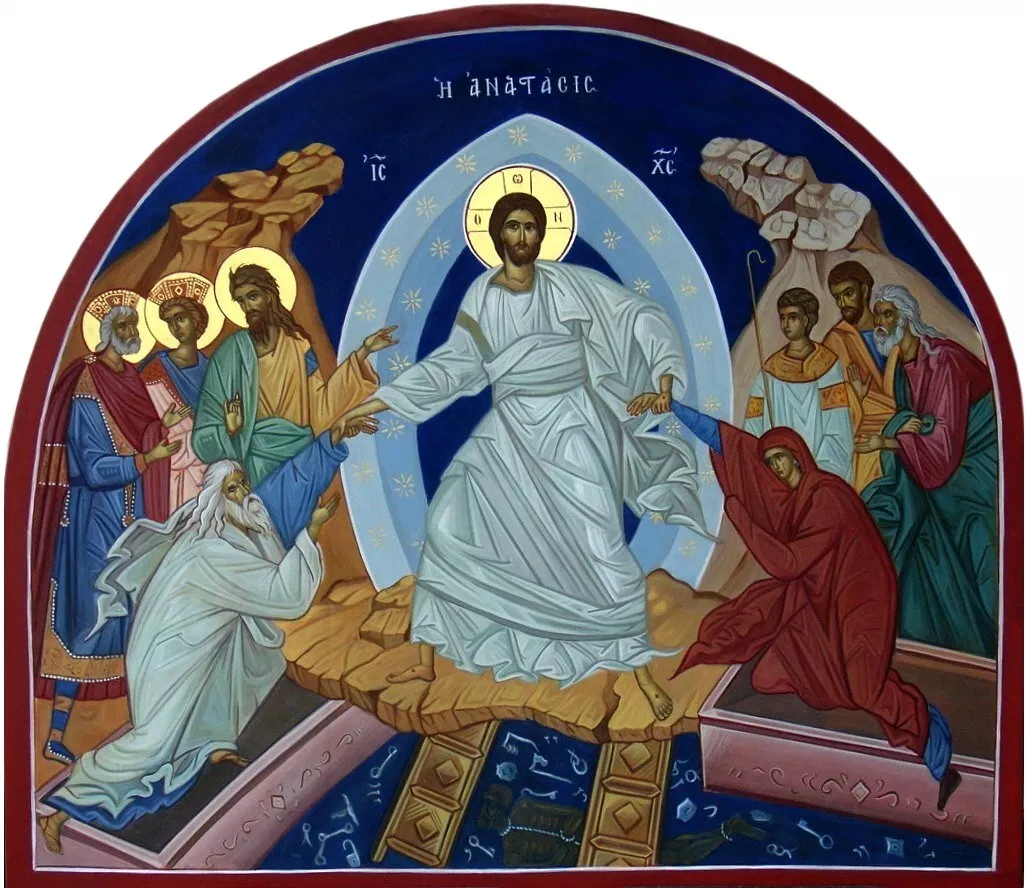
Since my last post accompanied by the image of Piero della Francesca’s painting of the Resurrection, when I said it was one of my favourite images of the Resurrection of Jesus, I’ve been thinking it over and over, and may have changed my mind…

There’s no doubt that the image powerfully represents the triumph of the Risen Lord. It also dares to portray the actual moment of Resurrection, and so is different from the great majority of images which portray the aftermath: the empty tomb, or the women or disciples first encountering their risen Lord.

I’ve since been reading John Dominic Crossan’s latest book, Resurrecting Easter: How the West lost and the East kept the original vision of Easter. It recounts a succession of pilgrimage visits to historic sites of the Western Roman and Eastern Orthodox churches, searching for evidence of the thesis that it was the East which retained the original vision of what the Resurrection meant. It’s an attractive book, lavishly illustrated with images taken by Crossan’s photographer wife Sarah Sexton Crossan.

Whereas Western art, when it shows the moment of Resurrection at all, emphasises the individual nature of Jesus rising from the dead, Eastern iconography came to focus on the universal aspect of Resurrection: that Jesus did not rise from death alone, but brought with him the whole of humanity, all who had “died in Adam”. This idea seems to have originated from the words in Matthew’s account of the crucifixion:

Jesus, when he had cried again with a loud voice, yielded up the ghost. And, behold, the veil of the temple was rent in twain from the top to the bottom; and the earth did quake, and the rocks rent; And the graves were opened; and many bodies of the saints which slept arose, And came out of the graves after his resurrection, and went into the holy city, and appeared unto many. (Matthew 27.50-53)

So, in this typical icon of the Anastasis or Resurrection, the risen Jesus is depicted with a cross-shaped halo, enclosed in an almond-shaped mandorla representing his luminous, risen glory. He stands astride the shattered gates of Hell, beneath which the chained figure of Hades or Satan lies crushed. With his two hands, Christ reaches out and grasps the hands of Adam and Eve, the first parents of the human race, and draws them out of their graves and into the light and glory of the Resurrection and of heaven. Behind Adam stand three other figures: King David, King Solomon (beardless) and John the Baptist. The figures behind Eve differ in different versions of this icon: here they seem to include Abel as a shepherd, and Moses. For a fuller description, see this post in the Orthodox Road blog.

After all, this Eastern icon tradition seems to me to present an image of a ‘better resurrection’. Not the ‘heaven and hell’ destiny that has so often been preached in Western Christianity, but a grand vision of a redemption that will embrace the whole human race, which believes with the Epistle to Titus that “the grace of God has appeared, bringing salvation to all”. (Titus 2.11 NRSV)

Do we believe in a big enough, and loving enough God, to accomplish this?

Preaching Resurrection

Resurrection, by Piero della Francesca, c. 1460

I’m currently reading Diarmaid MacCulloch’s Reformation: Europe’s House Divided 1490-1700, in the course of which my attention was grabbed by his almost throwaway remark about preaching, in which he describes sermons as:

that peculiar, intense form of dramatic mass communication that early Christianity seems to have invented: a struggle between the speaker, his God, the text of the Bible and an audience of believers.

That ‘struggle’ is a good word… Preaching is not about a speaker learned in theology who pours his or her knowledge into the empty minds of sheep-like hearers who know so much less. However much some (chiefly Evangelical) preachers seem to think it is, or would like it to be. Those hearers will always have their own ideas about whether, and how much, they will accept the speaker’s words as true, helpful, credible or relevant. They may have been schooled not to voice their dissent, or indeed to offer any comment beyond the conventional “Lovely sermon, vicar”, but whether they will allow what they’ve heard to change their lives or not, is another matter. And then there are the other characters in the conversation: God, and the biblical text, both of whom may have something to say about it, whether the preacher will or not.

For 37 years, and to some extent still, from time to time, I have dared to venture into that struggle. I’m ashamed to say I have sometimes believed that I was the one who knew, delivering the very word of God to those who knew not. After all, it can’t have been for nothing that I had spent all those hours and years studying the Bible and theology – can it? But as the years passed I came to what I thought in the end was not only a more honest, but also a humbler and more effective attitude to what I was doing in the pulpit. No longer the purveyor of all truth, but someone who had been given the privilege of standing among believers (and sometimes unbelievers, too) with the Bible open, and saying to them as it were: “These are the words which many of our forebears have believed to be, or to convey, the Word of God. A message from God! Let us sit here together and see if we can make sense of it: discover if it is indeed such a message to us, and if so, what it is saying to us.” Of course, I may have been in the position to have learned more of the text and its background that some of the listeners; but many of them knew much more of life than I did. My sermons were rarely in the form of a dialogue or discussion; but I hope they came to be speech in which I imagined and offered not only what I (the expert?) had to say, but also what any of the hearers might have had to say in response.

And one of the questions I found myself asking, and asked myself again as I listened to this morning’s preacher, was: Who are we preaching to, when we dare to stand in the pulpit and open our mouths about God? So often (like this morning) I think we preach with the assumption that out hearers are unbelievers whom we are trying to convince. Really? There may be some churches where people with no faith or understanding pitch up on a Sunday morning thinking, “I’ll just go in here and see what these Christians have to say for themselves.” But I’d be astonished if they were ever more than the tiniest minority. Perhaps – in the spirit of the shepherd who expended such effort in searching for the one sheep out of a hundred that was lost – we should preach to that person. But this morning I found myself thinking: Most of the people here believe, in some sense. What is the Gospel message, the good news, for those of us who believe?

I wasn’t sure that there was much that wasn’t thin fare indeed. It seemed to amount to: If you believe this, go out and tell everybody! Which seemed more guilt-news than good news. But I don’t mean this as (much) criticism of this morning’s preacher. I have been there myself, and done just the same. But now that I’m not so preoccupied with what I am trying to feed, and to whom, I find myself thinking more and more about what kind of spiritual nourishment I and others need to receive.

Often the words, and the preacher who delivers them, seem to be more of an obstacle to nourishment than a provider. We love our words so much! But sometimes I feel less nourished by the sermon, than by the words of the liturgy, or the words or melody of the hymn (not so often the ‘worship song’) we are singing, or a picture. It’s hard to depict the Resurrection… so I find myself wondering why one of my favourite representations of it is Piero della Francesca’s, dating from around 1460. It captures a moment before the women arrived at the tomb, when Christ rose triumphant while the guards were sleeping (Matthew 28.13). The risen Christ stands with his (curiously English-looking) victory banner in hand, his foot raised to lift himself out of the tomb (a very Italian, above-ground kind of burial place). But why does he look so spaced-out and joyless, as if he’s just awoken from a bad trip? His gaze is directed straight at us, but I wouldn’t call it warm, or attractive, or inviting. When, or if, he opens his mouth to speak – what will he say to us?

Will thinking and wondering about a question like that, do as much or more good, than all the words of those of us who preach to the unbelievers who aren’t even there?