Stewards of the Mysteries of God

In the course of nearly six decades of adult life, with numerous changes of address, most of them upsizing to a larger house, but latterly including a major downsize, we’ve acquired large numbers of books. Anyone who thinks ‘too many’ is clearly not One Of Us – for We all know there is no such thing as too many books. Nevertheless, there comes a time when downsizing means there will not be enough shelf space for all of our books… and certainly not enough for all the books we are bound to continue to buy. So during those six decades, we have not only acquired, but also from time to time shed books.

I’ve often wondered about the criteria for deciding which books to get rid of, and which to keep. Sometimes it’s easy enough: ‘I hated that’, or, ‘I’m never going to want to read that again.’ Sometimes you get rid of a book and later regret it and buy it again. In the worst case, you buy a book you think you got rid of, only to find the original copy is still there on your shelf. But that doesn’t happen very often. And sometimes there is something that makes you keep a book you haven’t opened for 20 or 30 years, because – well, what? Because it has some special significance in your life, because you feel it spoke to you or changed you in some really important way.

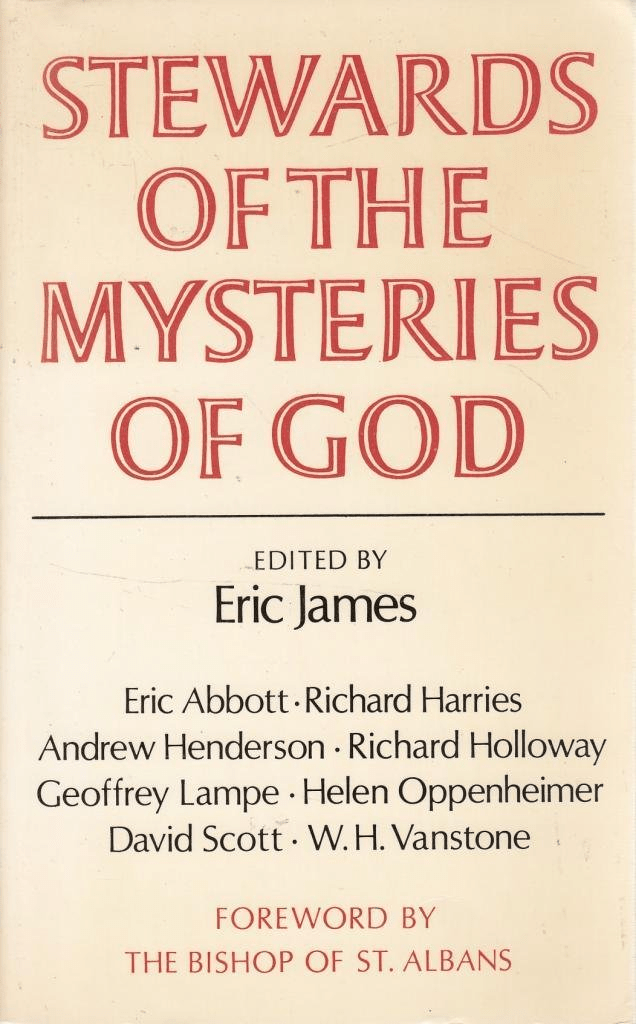
I was reminded of one of those books this week, when the Collect for the Third Sunday of Advent asks God to ‘grant that the ministers and stewards of your mysteries may … prepare and make ready your way’. It’s a reference to St Paul’s First Letter to the Corinthians, where he writes ‘Think of us in this way, as servants of Christ and stewards of God’s mysteries. Moreover, it is required of stewards that they should be found trustworthy.’ (1 Cor. 4.1) The slender book on my shelves (only 88 pages) that takes its title from that verse is Stewards of the Mysteries of God, edited by Eric James, published by Darton, Longman & Todd in 1979 at £1.95.

It was a collection of essays written by a number of theologians whose names read like a Who’s Who of the Church of the 1970s. Richard Harries – not yet the Dean of King’s College, let alone Bishop of Oxford or Baron Harries of Pentregarth… Richard Holloway, not yet the Bishop of Edinburgh. But all of them, in some way, connections of the then Bishop of St Albans, the Rt Revd Robert Runcie. The book was planned as a preparation for the St Albans Clergy Conference in September 1979, but published as something of interest to the wider Church (as well as, incidentally, to help with the costs of producing the book and so save the diocese money.)

And the significance of that clergy conference, for me, was that it was the first major diocesan event that I attended after my ordination as Deacon just two months before. I can’t remember how many clergy attended – it must have been a few hundred – but we all travelled to the University of Kent at Canterbury, then a mere 14 years old. And there were all the things you would expect a clergy conference to include: worship, lectures, discussion groups, meals, drinks in the bar… Of which I remember almost nothing. It was 45 years ago, after all.

And yet. And yet. I believe now that the conference, and the book that I had (obediently, as a new young curate) read in preparation for it, represented a big turning point for me. It was perhaps not the first thing, but certainly one of the first things, that opened my eyes to the undoubted truth that there was more to Christianity than ‘Conservative Evangelicalism’ had to offer1.

So I took the book off my shelf and read it again, and find it does indeed have many insights which may not always have been part of my faith before then, but certainly have become important in the years between.

Concerning the importance of Mystery in the Christian faith, rather than certainty. The mysteries of God are not things that are secret or concealed, but things we could not discover by our own efforts, which God reveals to us. The ‘deep affinity between the mystery of God and the mystery of humanity’. Gabriel Marcel writes, ‘A mystery is something in which I am myself involved’. Patrick White’s epigraph to his book The Solid Mandala:
There is another world,
but it is in this one.2
I thought I came across this only years afterwards with the shock of recognition, ‘Yes, that’s true!’ but no, I first read it in 1979.

Vanstone, on the Church’s purpose:
“The raison d’être, the responsibility, of the Church is to recognize what is happening in the world, and what is actually at stake in what is happening. What is at stake is the triumph or the tragedy of the love of God.”
And on What God needs: (How radically daring it was, to consider that God needs anything!)
“God needs only that which love itself needs — the response of the beloved other, without which love’s own work of giving remains incomplete.”

Richard Holloway, on the proper role of the Church, following Jesus, a ‘spiritual terrorist’, out of whose mouth came both the certainty of hell and damnation for sinners, and a gentleness and pity for us in our lostness:
“The Church is really the trades union of the damned. … I have come to believe that it is always the Church’s task to plead with the divine anger on behalf of the divine mercy. I say this because I believe that this, finally, is the meaning of the mystery of Christ. … The final mystery, then, is forgiveness.”

And Richard Harries, arguing that the Church needs to take seriously the reasons for the radical unbelief of many in contemporary society. While remaining faithful to our own convictions, we must not immediately leap in to refute unbelievers, but listen and give full weight to the reasons for the unbelief that is in them. We must learn to be comfortable with inhabiting the space between faith and unbelief: “A person will therefore be a person of the borderlands, to use a word of Professor Donald MacKinnon.”

Listing some of those ideas now, they all seem so obvious. They make it sound like discovering Stewards of the Mysteries of God was a small thing. It wasn’t, at the time.

  1. Oh, you noticed that none of the worthies contributing to the book came from that wing of the Church? ↩︎
  2. This is often attributed to W. B. Yeats, but was actually by the French surrealist poet Paul Éluard who wrote, “Il y a assurément un autre monde, mais il est dans celui-ci”. ↩︎

Christmas – And whose Church is it, anyway?

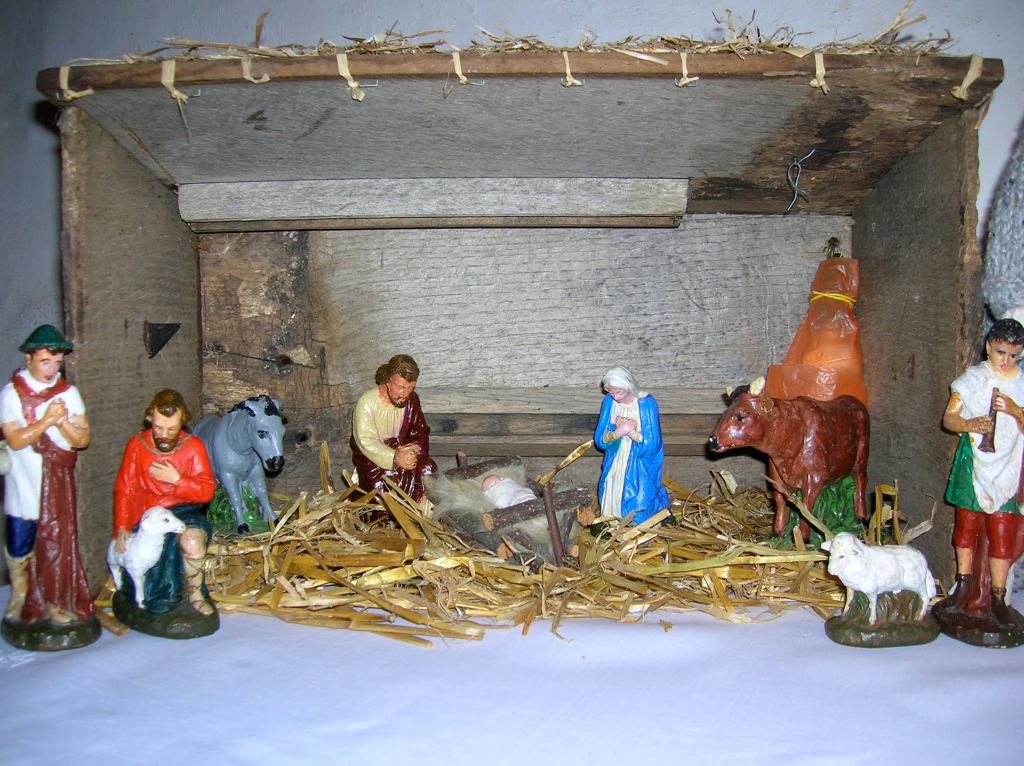
Christmas crib at St Nicholas, Marston

It’s that time of year again. When all the working clergy (God bless ’em. Who’d want to be one of them, just now1 ?) are planning for the annual influx of Christmas worshippers, and trying to think of different events and services to draw them in. Here’s my advice, guys: don’t bother with all those wizard wheezes for new and innovative and ‘relevant’ services. People will come anyway. They prefer the traditional, the tried and trusted, the things they remember and are used to from the last time they came, and the time before that, and every time they’ve ever come at Christmas. Listen, that’s what they come for.

It’s because Christmas is magic, miraculous. Even for the rest-of-the-year-round practical atheist or convinced agnostic, there is something about Christmas, the traditional so-familiar readings and hymns, that draws them again and again. And for some reason they tolerate all the extra stuff that the working clergy (God bless ’em) try to include in the services. Sermons (ugh) that are clearly meant to convert them into ‘real Christians’ who will come during the rest of the year. Activities. Film clips on the big screen. Sharing their thoughts with the people sitting round them.

It’s almost as if the clergy who plan such events don’t trust God, or the tradition. Trust them, brothers and sisters! The familiar readings really are the Word of God – so let them do their work. The traditional carols were written by people who were steeped in that Word: that’s why they work so powerfully. Let them do their work too: they don’t need endless commentary, and contemporary references laid on with a trowel.

Most important of all, please please please don’t refer to the extra worshippers who come at Christmas as ‘visitors’ or ‘guests’. If they are parishioners, it is their church. Calling them visitors or guests is already telling them they don’t belong; and I reckon part of the message of Christmas is that this is for everyone; that in God’s eyes, everyone belongs; that the angels at Bethlehem announced ‘good tidings, of great joy, which shall be to all people’. In the same way, don’t thank them for coming. They’re not doing you a favour, and that’s not what they came for. They came, for whatever mysterious, miraculous reasons, to meet with God. And they will meet with God, as long as there isn’t too much of you getting in their way.

And who knows? If you don’t stand in the way of other people in the Christmas services, maybe God will meet with you there, too. I’m certainly praying just that for all worship planners and leaders, and for all those who come to worship with you, this Christmas. In their church.

  1. Actually, it’s one of the best vocations in the whole world. I wouldn’t have missed it for anything. But I’m still happy to be out of it, and no longer to have the responsibility and all the pressures and demands laid on the working clergy. God bless ’em. ↩︎

Thoughts on the Makin Review

Long, long ago, I used to think I was a ‘Conservative Evangelical’. Maybe I even was one. All through theological college, while I was studying for my B.A. in Theology, and other qualifications for ordination, I somehow felt that I had to ‘hold the line’ against the liberalism (or whatever?) of modern academic theology. I have no idea where this came from… Perhaps it’s matter for another blog post sometime.

This didn’t survive for very long when I went to serve my curacy in a ‘Conservative Evangelical’ parish. I quickly learned that this wasn’t quite where I stood after all; I wanted something different and maybe broader; I realised there was more to truth than I had thought.

The things that I valued about the tradition I thought I belonged to were: love of Scripture; devotion to Jesus; personal faith and commitment. Somehow, unaccountably, I had learned that these were the special characteristics of this brand of Christianity, which were not shared by any of the other groups that called themselves Christian. Again, I have to ask where this came from, and how I could possibly have believed it. It’s one of the mysteries of my reflection on my faith journey, the way we pick up and believe and live with and find it so hard to move on from, what we are taught (or sometimes only imbibe subliminally) in the tradition we find ourselves in.

Looking at the Makin Review makes me not only wonder how I continued to think of myself as a ‘Conservative Evangelical’ for so long. It makes me wonder how anyone can still feel happy to subscribe to the narrow beliefs of that particular subset of God’s people. Of course, not every ‘Conservative Evangelical’ is going to be an abuser. Most people who call themselves ‘Conservative Evangelicals’ will have been as appalled as the rest of us, at the report of the Review’s findings. But at the same time, it’s obvious that John Smyth’s long history of physical, sexual and spiritual abuse, of his family first, and later of hundreds of boys and young Christian men, had its roots in the kinds of belief that were, and still are, often found in ‘Conservative Evangelicalism.’ A particular kind of emphasis on sin and repentance which focuses more on sex than on any of ‘the weightier matters of the Law’ like injustice, love and mercy, the abuse of power… Together with patriarchy, misogyny, homophobia, belief in corporal punishment, self- and body-hatred. The image of God that Smyth must have had, to believe and behave as he did, must have been a hideous, cruel and bullying, idol.

I was particularly horrified by the quote from one of Smyth’s victims, describing the policy of the Iwerne Trust and its summer camps:

“The philosophy was … that you could only really serve God with a dog collar around your neck in the Church of England and that the job, the mission, the task, the quest was to get boys of real promise to become ordained in the Church of England, to become bishops and archbishops, and for the Iwerne tribal, evangelical, narrow-minded brand of Christianity, which is anti-gay, as Smyth was with the Whitehouse trials, to infiltrate the whole of the Church of England and to take it over.”

The sectarian arrogance of believing ‘We’re right and every other variety of Christian is wrong’, and ‘Therefore we plan to take over the whole of the Church of England’ beggars belief. It’s as if they had never read the Bible, either the teachings of Jesus, or St Paul’s injunctions to love one another and consider other Christians better than oneself. In the end, I guess that was one more reason why I left ‘Conservative Evangelicalism’: I wanted to be a biblical Christian; and for all their claims and posturings, I don’t believe that’s a priority for ‘Conservative Evangelicals’.

One more thought about the Makin Review, is about all the men who were involved in covering up Smyth’s abuses, not only when they first became known around 1981, but even after he had fled to Africa where he continued his activities. I knew some of these men, I went to some of the churches where they had been active. They were apparently sincere, honest, intelligent, educated men. So how could be so stupid? One of them, David Fletcher, explains why he did nothing to pass on what he had learned about Smyth’s abuses:

In an interview with us, David Fletcher said: “I thought it would do the work of God immense damage if this were public.”

How could he really imagine it would not inevitably become known some time down the line, and by then do even greater damage to the ‘work of God’?

Another leading Evangelical figure, also now deceased,

said that he was told of the abuse by a curate at Winchester College and was “sworn to secrecy.”

It’s a strange kind of morality that gives more value to ‘keeping a confidence’ than speaking out against evil, and telling the truth, even if it means ‘betraying’ a confidence (which should never have been asked for by a Christian clergyman in the first place), if it means saving not one but hundreds of victims from harm and trauma. Surely, that’s a sorry kind of modern Pharisaism, like the one that believes you can protect the work of God from damage by covering up the Truth?

I haven’t read all of Makin’s review, and don’t know if I have the stamina to get to the end of it. No doubt the repercussions will run and run. Who else will resign or be called on to resign? It’s good if we now have a culture of safeguarding which brings abuses to light sooner than the 40+ years it took for Smyth’s to be fully known. Or do we, yet? I pray, and long, for this battered old Church that I love to become a safe and inclusive space for everyone. Sooner, rather than later.

Demon Copperhead

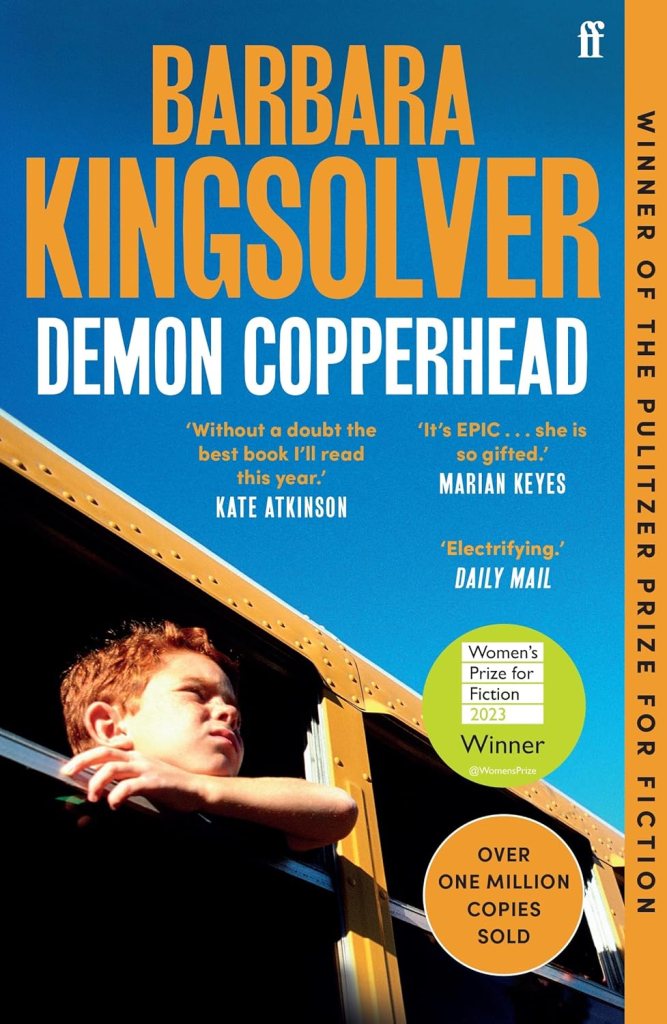
Barbara Kingsolver’s latest novel (2022 – but I’ve only just got around to buying a copy at the local Oxfam Bookshop) is a hard novel. An angry novel.

Hard, because it’s an unsparing account of generations of characters in Appalachia, West Virginia, living their lives in circumstances of poverty, familial and social breakdown, failures in social and medical care, educational inequality, and addiction to alcohol and drugs (especially opioids). The description of their hardships, pain, and suffering is relentless.

Angry, because all of them are victims of poverty, prejudice, and circumstances. All the risk-taking, the drug and substance abuse, are a desperate response to a life that so often seems impossibly hopeless.

The novel, famously (or notoriously?) is a reworking of Charles Dickens’s David Copperfield, another first-person narrative account of overcoming childhood poverty and neglect, to find a fulfilling artistic vocation and true love. It’s been a while since I read David Copperfield, so I needed some help from Wikipedia to identify many of the ways in which Kingsolver reworked the original in such a masterly way.

It did feel as if the long-lasting, painful misery of the addict would never resolve itself into the happy, hopeful ending I was looking for, and it was only in the last few chapters that it all worked out for Demon. Was David Copperfield’s happy ending similarly a last minute, with-one-mighty-bound outworking? I can’t remember, and will obviously have to reread it sometime soon.

But this was a good read. I recommend it.

Last Christmas

One of the traditions that got omitted during my ‘time away’ from the blog, was the posting of the Family Christmas/New Year picture. So, it’s only 11 months late, but here we all are when all of us last met at Tom’s house:

Standing: Annie, Bethan, Lottie, Dave, Esther holding Sephie, Martha holding Dodie,
Paul, Alex, Jeremy, Naomi, Libby.
Seated: Tom, Tilly, Aurelia, Grandpa Tony, Granny Alison, Elsie, Owen.

Keen followers of our Christmas pictures will notice with surprise that I am wearing a new Christmas pullover. Yes, in spite of my conviction that ‘A Christmas pullover is for life, not just for Christmas’, I finally yielded to pressure and let Alison buy me a new one for 2023. Will this one be my last? Or will I/we/the world still be around in 10, 15, or 20 years for her to buy me another one?

Coming ‘Home’

So, I’ve been away. For quite a time – it’s coming up towards two years since my last post. The truth is, I’ve been on a Journey. A Pilgrimage, maybe, towards some holy destination. Or a Quest, to seek and find my True Self.

In my last post, I wrote about a part of that spiritual journey I had been on since retiring back in 2016. It’s a mistake to suppose that, if you’ve been a Christian for 45 years and a vicar for 37 of them, you have somehow ‘arrived’. At certainty, or a place where you no longer have any progress to make, or something. Pretty much the opposite of the case. I’m sure I’m not the only retired vicar who finds themselves

a) relieved beyond measure that they’re no longer responsible for running a parish, filling in all the returns required by the Bureaucracy, keeping up to date with the law regarding marriages, burials and what have you

b) but also, asking themselves, What was that all about? I know it’s impossible for people in many professions to measure how successful they’ve been, but: Did I actually achieve anything? Was it worth all the hard work and soul-searching? Do I really believe all the things I used to preach to others, or at least, thought I ought to preach? Was it all even true?

So yes: some time around the start of the Pandemic, I had been disturbed by reports of growing antisemitism in many European countries, including the UK. I started reading about the history of antisemitism, and especially the role of the Church, and many of its most famous preachers and theologians (St John Chrysostom, Martin Luther, et al.) in promoting and institutionalizing this hatred of Jews and Judaism. Soon I was wanting to learn about what it was that they hated: Did I even know very much about Judaism.

To cut a long story short, I fell in love with the faith I was reading about. The contribution that Judaism and its adherents have made to the world is beyond reckoning, far greater than you would expect from a people who number probably less than 0.25% of the world’s population. I thought that Christianity grew out of, or at least alongside, the Rabbinic Judaism we know nowadays. Yet I found that many of the articles of Christian faith which I found most difficult and unpalatable were simply not there in Judaism. Like Original Sin. The need for blood sacrifice to turn away God’s anger so that He will not punish us for our sins. The need for people to ‘believe in and accept Jesus Christ’ in order to be ‘saved’. Because God incomprehensibly chose to create a human race of which the vast majority are destined for everlasting punishment if they don’t believe the right things about Him. The dualism of ‘Spirit Good, Matter Bad’. The Patriarchy and suppression of women’s voices and contribution.

You could say (as I did), “I don’t like Christianity very much.”

As well as reading a lot about Judaism, I also started using Jewish prayers for my daily prayer. And I loved them! There’s so much less of the whinging and grovelling that Christian prayers sometimes feel like, trying to curry favour from a mean and ungenerous Deity. The standard mode of Jewish prayer is Thanksgiving, in the form of blessing God 100 (or more) times a day. Blessing God for everything. The prayers frequently take the form of

  • Blessing and praising God because He does X
  • Asking God to do X
  • Thanking God for doing X.

For a time, I even contemplated converting to Judaism. I spoke to a rabbi about it, and she said “You can’t.” (I think that, like the Benedictines, they deliberately don’t consider wannabe converts until the fifth time of asking, because it takes five attempts to prove they are serious.)

The great thing about that episode of ‘not liking Christianity very much’ was that I never stopped believing in God. In fact, I came to believe in and love God even more, as I learned to thank God more and more, in and for all things. And came to suspect that He often doesn’t like Christianity very much at the moment. And I’m immensely grateful for this time of wilderness wandering, when I was not entirely sure about who I was, or where, or where I was meant to be and meant to be heading.

And then, Someone apparently decided it was time for me to come ‘Home’, or at least somewhere approximating to it. Alison wanted to go to a week’s conference at Lee Abbey – a place that’s hard to get to without a car. So my services as chauffeur were required. I hadn’t been to Lee Abbey for years, and was glad for the incentive to go again. So we both went to a conference entitled ‘The Call of the Wild: The Feel of the Holy’, on the themes of Pilgrimage, holy journeys and places, and the Celtic Christian tradition, led by Michael Mitton and Russ Parker. They are great friends and a great team; their talks are much more like witnessing a dialogue between two men who know each other well, have abundant wisdom, and above all enjoy each others’ company and their subject.

I found the ‘worship’ hard going. There were lots of ‘worship songs’ which as far as I’m concerned were anything but. But the talks, the walks around the Lee Abbey grounds, and the opportunities to talk and pray together at the seashore, among the trees, and on the hilltops, were times of real blessing. Russ recommended to me a book on theories of the Atonement, which for all that it was weighty, was very readable and helpful. By Fleming Rutledge, it’s called The Crucifixion: Understanding the Death of Jesus Christ.

I thought I’d give Christianity, especially of the Celtic variety, another chance. This was how, about six weeks later, I found myself driving Alison to Swanwick for the Annual Gathering of the Community of Aidan and Hilda, which is “a dispersed, ecumenical body drawing inspiration from the lives of the Celtic saints.” Getting excited about it as a ‘place’ that offers refuge and encouragement to people like me who feel disillusioned with much of what we see in the contemporary Church, and applying to become an ‘Explorer’, as they call wannabe members of the community.

So yes, it feels like coming ‘home’. And it feels like taking some tentative steps away from the spiritual home I’ve known, though not really away, but let’s say, forward, on new adventures of life and faith.

Watch this space, then…

A Very Peculiar Hatred

In his excellent little book Radical Then, Radical Now, the late Chief Rabbi Jonathan Sacks addresses the question: Why be a Jew? He wrote the book originally as a wedding gift for his son and daughter-in-law, but then enlarged and published it for a wider audience, both Jews and non-Jews. In the post-Holocaust age, in spite of the greater freedom enjoyed by Jews in many (especially Western) countries, most Jewish communities report an alarming decline in numbers of adherents. Jews are abandoning traditional practice, ‘marrying out’ and not creating the ‘Jewish home’ that used to be a central feature of Jewish life. They are not so much unaware of their Jewish identity, as rejecting it or trying to shed it.

At the same time, Sacks quotes statements of non-Jews who admire Judaism.

The British historian and writer A. L. Rowse described in his memoir written near the end of his life one of his unfulfilled dreams: “If there is any honour in all the world that I should like, it would be to be an honorary Jewish citizen.” Winston Churchill said, “Some people like Jews, and some do not. But no thoughtful man can deny the fact that they are beyond question the most formidable and the most remarkable race that has ever appeared in the world.”

Jews make up only about half of 1% of the world’s population. Yet the contribution they have made to world civilization is out of all proportion to their numbers. Since the Nobel Prize was established in 1901, over one-fifth, 20%, of Nobel prize winners, have been Jews.

Yet in spite of all they have suffered through millennia of persecution, in spite of the horrors of the Holocaust, in spite of their achievements and contribution, they are perhaps the most hated people in the world. In every country there are reports of antisemitism growing more widespread, more violent, more extreme.

Why this extraordinary, irrational, peculiar hatred?

At some time during the second year of COVID lockdowns, in the spring of 2021, as I became increasingly aware of the news of growing antisemitism, I decided to read about it. After years of not wanting to believe there was antisemitism in the Labour Party, I eventually learned I was wrong. I began to read more widely about Judaism and the experience and beliefs of Jewish people. It turned out that it was fascinating and beautiful. In retirement I was allowing myself to re-examine the beliefs of Christianity, expecially the ones I had always found difficult or unattractive. Like Original Sin, ‘total depravity’, the excellence of the spiritual over the physical and material, so that virginity was often prized over marriage. Like the exclusiveness of ‘salvation’, only through Christ — which, if you push it to its logical conclusions, suggests that a loving God created the vast majority of human beings knowing that they would be condemned to eternal punishment. Like, all the theories of atonement which attempt to explain how ‘salvation’ works. Like, the relentless drive to convert anyone and everyone who isn’t a ‘born-again’ Christian, and make them just like us.

And I find that most of these are just not there in Judaism. Whatever its peculiarities — and of course it has many difficulties of its own, like every human religion — it is in so many ways more humane, more universalistic, more life-affirming. Its typical mode of prayer is largely blessing and thanking God, not begging to be ‘let off’ the punishment we justly deserve, and longing for God to bring the world, and with it the whole human Story, to a blessed End.

So what’s to hate, about it?

Perhaps one answer is, it’s easy for bullies and haters to hate the people they regard as weak and unable to fight back. No one makes a scapegoat of a lion, which might have its own ideas about what was happening. But I have come to wonder if the real, deeper reason for the irrational hatred that is antisemitism, is that bad people hate what is Good. In its very essence, Judaism is about Freedom. Moses brought the people of Israel out of their slavery in Egypt, and made of them a nation who would be God’s “treasured possession among all peoples… a kingdom of priests and a holy nation.” The people of Israel are radically free. And that is what rulers and tyrants have hated more than anything through all the centuries. And it’s what the little people, who know that they themselves are not free but are slaves or victims, also hate passionately. They envy the Jews and so they hate them. They would admire them, but they cannot bear to admit that they are admirable, and so they hate them.

When God first called Abraham, God promised him,
“I will make of you a great nation,
And I will bless you;
I will make your name great,
And you shall be a blessing.
And I will bless those who bless you;
And curse him that curses you;
And all the families of the earth
Shall bless themselves by you. (Genesis 12.2-3)

Anyone who hates Jews, will be — already is — under God’s curse. No wonder they are such unhappy, unfulfilled, violent, hate-filled people.

Family Christmas/New Year Gathering

Back row: Sephy, Esther, Paul, David, Naomi, Alex, Tom
Middle row: Martha, Dodie, Bethan, Lotte, Libby, Tilly, Annie
Front row: Jeremy, Owen, Alison, Tony, Elsie, Aurelia

Another New Year, and on the last-but-one day of the Old Year we had our one and only whole-family get-together of the year. When there are 20 of us, it gets more difficult to have these occasions very often. Thanks to Tom and Annie having a bigger house now, and being the most centrally located of the families, we are able to meet at their place. A bring-and-share lunch with each family contributing a course, and a lot of (too much) drink. What could be nicer?

It was a noisy, beautiful, fun event, often too much for various of us in turn, so that everyone needed an ‘escape room’ at different times. The cousins are all close enough in age (2 to 12 years) to get on really well.

We feel wonderfully blessed to have such fine children, grandchildren, and children-in-law. I’ve recently been reading the stories in Genesis of the Patriarchs and Matriarchs. Looking at this picture makes me feel a but like Jacob. We haven’t got 70+ descendants, but what the children of Alison and Tony lack in quantity, they make up for in quality.

Is the Church Christian?

The late Chief Rabbi Jonathan Sacks wrote:

“Despite the efforts of Marcion and others to detach Christianity altogether from its Jewish roots, it proved impossible to make sense of the Christian message without connecting it to the history and sacred books of Israel.”

Marcion of Sinope was a 2nd century theologian who believed that Jesus had come not to fulfil the prophecies of the Hebrew Scriptures, but to preach a completely different God. This was a loving heavenly Father, radically different from the belligerent, judging God named Yahweh. Christianity therefore was completely discontinuous from Judaism, and so the Hebrew Scriptures could have no place in the Christian canon.

Marcion was denounced as a heretic by the great Church Fathers of the 2nd century, Justin Martyr, Irenaeus and Tertullian, and was excommunicated by the Church in Rome in 144 CE; but his teachings were in large measure a catalyst which helped lead to the formulation of the canon which came to be accepted by the orthodox Church. As a result, Christians have always read the Scriptures of both the Old and the New Testaments, making connections backwards and forwards in order to make sense of the whole of God’s revealed Word.

The Reformation in the 16th century enabled people to read the Old Testament in their own language, and this on turn led to a greater interest in learning biblical Hebrew and reading the Hebrew Bible in the original. The writings of the Old Testament were formative not only in the religious thinking of Protestant Europe, but also in their political thinking. The Puritans who drove the English Revolution and the moves towards constitutional monarchy, and in the following century the Founding Fathers of the independent American republic, were all inspired by the Hebrew Scriptures. It is impossible to imagine modern democracy without this biblical foundation.

Yet in the late 20th and early 21st century, developments in Church life and worship have led many churches to pay less and less attention to the Old Testament. The Parish Communion movement first brought about a decline in the services of Morning and Evening Prayer, both of which had included readings from both Testaments. The Eucharist became the main service, and often the only service, that many Christians now attend. Although the Lectionary encourages the use of three readings, Old Testament, Epistle and Gospel, many churches have found this unpalatable. It makes the service unacceptably long. People don’t want to listen to that much Bible. The sermon would have to be shortened, or we would have to leave out a hymn or a ‘time of worship’, and we can’t have that. I’ve heard all these ‘reasons’ put forward. Although many cathedrals still use all three readings, in the church I attend we hardly ever hear a reading from the Old Testament.

What effect will this have on people’s faith, in the long term? If Rabbi Jonathan Sacks is right, it will mean that the Christian faith will become incoherent, it will no longer make sense. Is this why more and more people are simply walking away? In the Evangelical churches, which are often reckoned to be the most ‘popular’, ‘successful’ and ‘growing’, there is an increasing tendency to be almost exclusively Jesus-centred. Instead of worshipping God the Father, we worship Jesus. We pray to Jesus, we sing to Jesus, often calling him our God, we ask Jesus for forgiveness, we use a form of Creed (in which we ‘affirm our faith in God’) which makes no mention of creation or the Father or the Holy Spirit, but only of the death and resurrection of Jesus.

This sickness may very well prove terminal. Because Marcion has won. Many parts of the contemporary Church are not Christian at all: they are Marcionite.

NaNoWriMo

I can’t believe I haven’t written anything in this blog about NaNoWriMo! Maybe in one of the earlier iterations of my blog? But I don’t know.

NaNoWriMo stands for National Novel Writing Month. It’s an Internet event which takes place every November, when aspiring novelists challenge themselves to write 50,000 words of fiction in the 30 days of the month. That’s 1,667 words a day. You’re not competing against anyone else, just against that (hopefully nearing) target. And you ‘win’ NaNoWriMo by reaching that target.

I’ve done NaNoWriMo 8 times, and won 8 times. I find the challenge gives me a great incentive to actually get some long-form writing done. It gives me the opportunity to be truly creative, and that has always been an almost mystical experience. I can start the project with hardly any idea of where it’s going, and then something magical happens. It’s like going out into the Wild Wood and ‘finding’ Story that is already there, meeting Story that comes towards you and embraces you like a fairy lover. Or whatever other image appeals to you. It makes me believe.

Of course, real writers sniff at a mere 50,000 words – that doesn’t make a real novel, they say. At best you might call it a novella. But I rather like the discipline of making a story and bringing it to a conclusion within that length. So here are the titles of my works over the years:

Dark Messiah – 2005

My first NaNo, which I wrote the month after Dad died, partly as a kind of grief work. It’s a fictional telling of the life of the biblical King Saul, told by 12 of the people who knew him.

A Month of Living Vicariously – 2011

This may be my favourite of all time. It concerns librarian Adrian Burrows, and takes the form of his diary during the month that he is doing NaNoWriMo. The research he does for his Excellent Plot results in three people trying to kill him, his conversion to Christianity, and his falling in love with his boss. I don’t know about anyone else, but I found it very funny. It still makes me laugh.

(Spoiler alert: Adrian doesn’t win NaNo. But he does get the girl.)

A Book of Changes – 2016

My Esperanto novella, written out of my anger over the Brexit vote, and what I believed would be the downfall of civilization as we know it. Our hero Joseph gets out of England while he still can, and embarks on a picaresque journey across Europe which leads to the discovery of the true heir of the Emperor Charlemagne, and the restoration of the Holy Roman Empire. The evil media mogul and would-be world dominator Marduk is defeated, and everyone lives happily ever after.

Blood Will Out – 2017

What happens if you are convinced your blood is tainted, that your genes are fated to produce generation after generation of evildoers? This fantasy history of the last half of the 20th century and the first decades of the 21st describes the age-old battle of Good vs Evil, and the final (?) triumph.

This is the only one of my completed novellas which has been ‘published’, because I wanted to learn how to produce a Kindle book. I did it! Though I wouldn’t be able to remember how. And it is available for purchase either as a Kindle book, or a print-on-demand paperback.

Latinitas – 2018

What if the Roman Empire had never fallen, and still ruled the world in the 20th century? Told by a Celtic British young man, Marcus Trinovantius Faber, this recounts how he is recruited by the Roman secret service but becomes part of a plot to overthrow the Empire, free the slaves, and make Christianity a legal religion.

Telling My Beads – 2019

Not a novel at all, but a memoir of my life and faith, and what I believe(d) – at the time. I haven’t revisited it recently to see if I still do believe it.

The Mild-Mannered Librarian Returns – 2020

Adrian Burrows has married his lovely boss and they are still working together at the library. There they discover a plot to use the powers of magic and the occult to overthrow the governments of major world countries and take control for their own secret organization.

Sadly, this is the only one of my NaNos that I never finished. I ‘won’ all right – it’s over 50,000 words long – but I couldn’t think of a way to bring it to a satisfactory conclusion. So as far as I know the plot to overthrow the world’s governments and install autocratic dictatorships is still operational. You’d never think so, would you?

Ye Watchers and Ye Holy Ones – 2022

Why are there so many religions? What was God thinking of? This is the story of the heavenly Watchers appointed by God to observe, and possibly even steer, the different world faiths. At the beginning of the 21st century, when religion seems to have become toxic, and is perceived by many as part of the problem rather than part of the solution, this story provides some answers.

I’m quite pleased with this one too, but wonder if it may be too controversial to publish.


You might have noticed that all of them are about God in some way. I just can’t keep God out of it! (The strapline of my blog may give you a clue why.)