Missing: Victorian Librarian

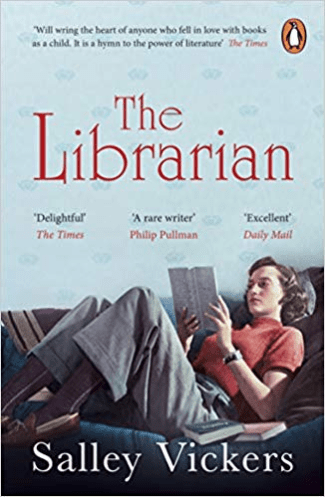
Somewhere high in the Austrian Alps there may lie the body of a librarian, for that is where Robert Proctor was last seen, at the head of the Taschach valley, on the morning of Sunday, 6 September 1903.

How could anyone resist an article with an opening sentence like that? The article, by C. J. Wright, entitled The Missing Librarian, appears in the latest issue (no.59) of Slightly Foxed, which subtitles itself ‘The Real Reader’s Quarterly’. If you have never read Slightly Foxed, or are not yet a subscriber… WHY EVER NOT? Of all the publications I subscribe to or have ever subscribed to, this is the only one – the only one – that I read, without fail, from cover to cover. It describes itself as:

The independent-minded quarterly that combines good looks, good writing and a personal approach. Slightly Foxed introduces its readers to books that are no longer new and fashionable but have lasting appeal. Good-humoured, unpretentious and a bit eccentric, it’s more like a well-read friend than a literary magazine.

And it is just what it says on the tin. It’s a constant source of discovery and delight. I used to think I would need to search out and read every single book its contributors write about, which would have proved a challenge when so many are now out of print. And yes, it has introduced me to lots of previously unknown books and writers I have since enjoyed. But that’s no longer essential: it’s often sufficient to eavesdrop on the enjoyment of the article writers, some of whom have indeed come to feel like fascinating friends. (If I have one small niggle about them, it’s that so many do seem to be the product of a private school, or at least a boarding school, education. But we can’t all be State-school kids, I suppose.)

And for this particular retired vicar, in whose breast still beats the heart of a librarian, how could I not be intrigued to read of a colleague who met such a mysterious fate over a century ago? According to Wikipedia, one of Proctor’s friends thought the missing librarian may have committed suicide up there above the Taschach valley. But C. J. Wright leaves the mystery much more open. Perhaps in the far future, a few thousand years hence, his frozen and preserved body will be found, like that of Ötzi the Ice Man, and the mystery of his death be finally resolved. But perhaps it’s more fun that it’s not.

Robert Peston’s WTF?

WTF?WTF? by Robert Peston
My rating: 5 of 5 stars

Robert Peston for Prime Minister!

His North London Jewish background is so familiar to me from my own history and native place. He’s my kind of political commentator, too, and in this book (bracketed by a letter to his much-loved late father) he addresses the problem of why the world has gone ‘bonkers’. How come the world’s most successful, wealthy democracies are throwing themselves into the arms of mad populist leaders, and voting for such lunacies as Brexit and Trump?

Peston’s analysis and prescriptions sound totally like common sense; yet in the midst of all this madness which so often leaves me feeling really depressed, he somehow snatches hope, and a degree of optimism, from the jaws of despair.

The key fact is that behind the madness of those 2016 votes, lies the deep dissatisfaction of all those in our societies who feel they have been left far behind in the growing prosperity they see around them. It’s this inequality of wealth, opportunity, prospects, and the fair sharing of the wealth of nations, that we need to address and radically change. It’s a call to the 48% to stop trying to stop Brexit (and if we can’t stop it, at least hoping it will be the unmitigated disaster we’ve all along said it would be), and to work as hard as we can to make it work the best it can. What’s needed is some kind of ‘Brexit mission’ to reunite the country, and mend what’s broken in our economy and politics.

As Peston says, he doesn’t have all the answers, and maybe some of the answers he has are also bonkers. But we at least need to be thinking, and especially talking, about the issues he raises here.

View all my reviews

In which I waver from my faith – in democracy

Hand on heart, I have a terrible confession to make. I have been one of those — and we are many, many — who have been secretly wondering if democracy is such a great idea after all. When we see Donald Trump in the White House, and the United Kingdom set on a collision course with the iceberg of a no-deal Brexit — all as a result of the democratic process — aren’t we bound to ask ourselves that question?

I’ve even come up with lots of bright ideas for how to remedy the situation, by reverting to some kind of a limited franchise. People like that foolish woman who greeted the announcement of the 2016 General Election with the cry, “Not another one!” She’d be on my little list. Anyone who didn’t want to vote would be on my list. Anyone who didn’t vote would. Anyone who reads the Daily Mail or the Murdoch press…

They’d all be disenfranchised, and because it was their own fault, there would be concomitant small curtailments of their civil rights. You see how it begins? I’m already ten steps to becoming a Fascist dictator!

So it’s great that Philip Collins has written When They Go Low, We Go High, published last year by 4th Estate, and surely not well enough known. It’s quickly rising up my list of Books That Everyone Must Read (especially if they want to be permitted to vote). (No!) Its subtitle is ‘Speeches that shape the world – and why we need them’. Philip Collins is a journalist, and was chief speechwriter for Tony Blair from 2004 to 2007. Though I’m trying hard not to hold that against him. But chiefly, he is passionate about democracy. This book is all about his conviction that liberal democracy is not only the best form of government, but the only one that really makes human flourishing possible. But he freely admits that democracy is in crisis, endangered on many fronts; though this is also nothing new. Perpetual crisis and danger seems, in fact, to be the permanent state of democracy.

The book quotes and analyses many of the most important speeches that have been made all down the ages, from the time of Pericles to Barack Obama, about the importance of government ‘of the people, by the people, and for the people’. The list includes Cicero, Lincoln, Kennedy, Churchill, Reagan, Elizabeth I, Mandela, Aung San Suu Kyi, Martin Luther King among others. Alongside the extensive extracts are Collins’s comments about how each speech works, what makes it great and important, and why it matters.

The five main sections of the book define five political virtues:

  • through politics the voice of the people is heard
  • politics commits us to persuasion rather than force
  • through politics the demand for recognition can be heard
  • equal consideration of all citizens in free societies is the means by which the material condition of the population is improved
  • when politics prevails, the worst of human instincts can be tamed.

Among the greatest dangers currently facing democracy is populism. On this, Collins writes (p.81)

Populism begins with recriminations about the governing elite and, to use Donald Trump’s extraordinary allegation, their ‘criminal enterprise’. It ends with recriminations about the constitution. All the while it claims to have special knowledge of the will of the people. It is a fraud from start to finish. Plato hated democracy because he thought it led to populist rulers. There is a risk, if we do not find the words to advertise the virtues of conventional politics, that Plato’s anguished prediction will be proved right. The task for the responsible democrat is therefore to describe what has gone awry and find words for a better future, like the wonderful writing in Jefferson’s 1801 Inaugural Address and the compressed poetic expression of Lincoln’s address at Gettysburg. The solution to disenchanted politics cannot be populism. It has to be better, more enchanted politics.

I realise, reading this, that I had fallen from grace, become a backslider with regard to my faith in Democracy. I repent and recommit, and hope to make amends. But that means that, just as the subtitle of this blog pleads for a re-enchanted Church, so my citizenship pleads for just that re-enchanted politics.

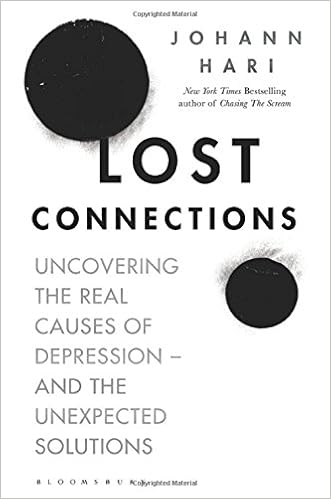
Lost Connections, by Johann Hari

When he was 18 years old, Johann Hari went to his GP seeking help. He explained that he felt an enormous emotional pain that seemed to be leaking out of him uncontrollably. His doctor told him a story: that his distress was caused by a chemical imbalance in his brain, specifically a low level of something called serotonin. By taking antidepressants, his serotonin level could be restored and his depression would go away. Johann left the doctor, collected his prescription, and took the first of thousands of little tablets. Almost at once he felt relief, his pain seemed to be lifted. But after a couple of months, it returned and soon he felt just as bad as he had before. He returned to the GP, who prescribed a stronger dose. Again he felt an immediate improvement, which lasted for a few months until once more he fell into a severe depression. This process was repeated several times, until Johann was on the strongest dose of SSRIs, which he continued to take for 13 years. The side effects were horrifying. He put on huge amounts of weight as a consequence of almost compulsive junk food eating. And worst of all, he was still depressed. The drugs were not working for him, and he was not alone: although exact figures are not available for the UK, it is estimated that 1 in 5 US citizens are on antidepressants.

It was at this stage that he began to ask why? Why are so many people depressed? Why are chemical treatments apparently so ineffective? What alternative remedies might there be?

His latest book, Lost Connections: Uncovering the real causes of depression and the unexpected solutions, describes the results of his questions. He spent years looking at research data and interviewing the scientists who had collected it. He travelled all over the world, visiting many of the researchers but also going to places where different, innovative ways of dealing with depression had been tried.

His concluded that depression is not in the head, but mostly caused by real factors in the world outside. The one thing most of those factors have in common is that modern society is sick, and it should come as no surprise that so many people respond to that sickness by falling ill themselves. Johann sums this up by describing it as a ‘loss of connection’, because of the way we are forced to live in the modern world. Among the nine causes of depression and anxiety that he has identified, he lists disconnection from meaningful work, from other people, from meaningful values, from childhood trauma, from status and respect, from the natural world, and from a hopeful and secure future.

If you’re like me, you will respond to a lot of this by thinking, Of course, I’ve always known that; but why then don’t we, or doesn’t society, do something about it? Part of the answer is that Big Pharma makes billions of dollars from the widespread use of antidepressants (also they pay for and conduct most of the research which ‘proves’ the effectiveness of chemical antidepressants); but another large part is that there are too many other political vested interests that resist the major reforms to society that would help solve the problem.

This is a brilliant book, informative, full of heart-warming stories that you just long to see turned into one of those ‘feel-good’ films about people battling against overwhelming odds, to turn around their own lives, and the life of their neighbourhood. There are lots of things we can do as individuals, to lift ourselves out of depression (or to improve our emotional health generally); but much more than that is needed. We need to be working for radical changes to society and the way we live. It doesn’t have to be like this. The changes we need are hard to imagine, difficult to begin, and yet many of them don’t require a lot of expense: they’re simple enough to do, they’re not rocket science.

We know this stuff! Why don’t we do it, and why don’t we protest and keep protesting to the people in power to make these things happen?

Who’d have thought I’d be agreeing with Elton John? But I do, when he says of this book, “If you have ever been down, or felt lost, this amazing book will change your life… Read it now.”

See and read much more about it on Johann Hari’s website.

Stoner, by John Williams

I suspect this is an old man’s book. I don’t know that I would have known what to do with it 40 or 20 or even 10 years ago. One reader proposed as an alternative title: Life Sucks And Then You Die. But no. It’s the story of a life shot through with bitter sadness, disappointment, seeming failure, yes. But it’s also the story of a life heroically lived, and lived, as Stoner himself comes to understand, with moment by moment passion, and love. It’s not a sad or depressing book, but one that breathes quiet, considered, hope. And it has one of the best and most moving descriptions of dying (and who can do anything other than imagine what that is like?) that I have ever read.

I especially loved this paragraph:

He had no wish to die; but there were moments, after Grace left, when he looked forward impatiently, as one might look to the moment of a journey that one does not particularly wish to take. And like any traveller, he felt that there were many things he had to do before he left; yet he could not think what they were.

And this, which I guess could be the most important question one could ask oneself about one’s life:

What did you expect? he asked himself.

Emmanuel Carrère’s The Kingdom

Emmanuel Carrère's *The Kingdom*

I’d never even heard of Emmanuel Carrère’s The Kingdom until I found a copy in the religion section of our local (independent!) bookshop. It was one of those “This looks fascinating – must take it home with me” encounters. And having taken it home and started reading, I checked out the review in The Guardian, to see what others had thought of it. The reviewer, and numbers of those who commented on the review, refer to the author’s ‘scandalous narcissism’, which many find truly off-putting. True, it’s a distasteful trait. But in his favour: Carrère does confess that this is a fault of his: a confession you can either find strangely engaging, or even more infuriating. His Ego is the most important thing for him – but after all, isn’t that true about many of the people who write personal blogs, or share their lives on social media? Narcissist he may be, but he’s an intelligent, urbane and interesting narcissist, so I didn’t mind his company for the duration of this read. (Whether I would be able to stomach him in the flesh: that’s another matter.)

So what kind of a book is this, a huge bestseller in its native France? I think we first have to recognise that it is, well, French: the kind of book we hardly have in this country. In France, after all, they respect and admire intellectuals. Whereas in the UK, intellectuals, like any kind of experts, are people our leaders and opinion-formers have taught us to distrust, disbelieve and despise.

The Kingdom is partly a memoir, recording Carrère’s conversion to Christianity in the early 1990s, his years as a devout believer, and his subsequent loss of faith, or at any rate ceasing to be a believer. Yet he is still fascinated, you might even say obsessed, by the New Testament, and by the phenomenon of Christianity. So the main part of this book is a retelling of the New Testament, in particular the early years of the Church, the life and missionary journeys of St Paul, his letters to the churches, and the work of St Luke in being the earliest ‘historian’ of the Church, later author of the gospel that bears his name, as well as (possibly?) other NT books which for all I know no one other than Carrère ascribes to him.

Is it pure fiction? Or can some of it possibly be true? Carrère himself doesn’t claim that it’s all true; only that some parts of it are believed by many scholars, that other parts are more or less speculative, along a spectrum of probable – likely – possible – at least plausible. He draws fascinating analogies with other faith movements in the course of history, notably the growth of Communism. I’m not convinced that the power plays between the Russian communist leaders, Lenin, Trotsky, Stalin and the like, are comparable with those between Paul and the the leaders of the Jerusalem Church… but that’s the kind of thing I mean. In other words, you may find The Kingdom fascinating, enlightening, giving you lots to think about that you’ve never thought about before. Or just plain annoying, and downright wrong. But dull? No.

For me, it was probably all of those things by turns. Carrère, to my mind, gives too much weight to what Ernest Renan had to say; but then again, that may be something to do with my sometimes sharing the Englishman’s traditional Gallophobia. Here’s my favourite (AKA, least favourite) example, talking about what really happened on the first Easter Day:

When I say that no one knows what happened, I’m wrong. What happened is very well-known, only: it’s one of two different and incompatible things according to what you believe. If you’re a Christian, you know that Jesus was raised from the dead: that’s what being a Christian means. Or you believe what Renan believed, and what reasonable people believe. That a small group of women and men — the women first — deeply stricken by the loss of their guru, started spreading the word that he’d been resurrected, and that what happened next was not at all supernatural but astonishing enough to be worth telling in detail: their naive, bizarre belief that should normally have withered and died with them went on to conquer the world, and is still shared by roughly one quarter of the earth’s population.

Apparently, according to Carrère, ‘reasonable people’ believe something even more unlikely and impossible than believers. But then: I would say that, wouldn’t I?

All in all, this is a book I’m glad to have read and to recommend. I hope you enjoy it, learn from it, argue with it and shout at its author, as much as I did. Most of all, I hope you will stop ad think about it many times as you read it, and then put it down and turn back to the New Testament, to find out what it really says.

Written with StackEdit.

The Splash of Words

Subtitle: Believing in poetry,

by Mark Oakley

This book has been on my Wish List since the summer. Then I gave up and bought a copy myself: who knows if anyone else would have bought it for me, if not?

(If you’re near Blackwells, they have a £2 off offer on it; Amazon never give much of a discount on Canterbury Press books, so support your local bookshop!)

It’s a timely book; it’s a book I need to read right now, with all of the soul- and heart-and-mind-searching that has come with retirement. All the questions about: What is all this God-stuff about, anyway? Has the Church lost its mind? What the devil does it think it’s doing? (And I probably mean that in its ancient Prince of Darkness sense…) What is God up to, letting us and our religions get in the God-awful state they’re in?

Mark Oakley is Chancellor of St Paul’s Cathedral, and poetry is one of his passions. In this book he collects nearly 30 poems, to each of which he appends a bit of introduction and explanation (but not too much) and a meditation on what it can help us to see about what God is up to, ‘the unignorable intuition that lies at the heart of everything written here, that God is in this world as poetry is in the poem’.

His introductory essay alone is worth the money. It made me laugh and weep and sigh with pleasure. (Also with envy that he’s so brilliant, but that’s another problem.) And want to learn it by heart so I can use it and pretend I thought of it. If you’re an underlining kind of reader, get your pencil ready: there is so much here you want to store up and think and think about.

One of my special favourites, among oh, so many, is his ultimate rejoinder and rebuttal of all those people who have conned us into thinking we must make Christian faith and worship ‘relevant’:

Christians should be poets in residence and their worship should be poetry in play because, at the end of the day, we are not seeking relevance but resonance — not the transient ideas of today that can convince for a time but the truths that address the deepest longings of a human life and a fragile world.

If you follow this blog you can probably expect lots more quotations from this book in days to come. Better yet, go out and buy it for yourself.

Why Dylan Matters

I have been unfaithful to Bob Dylan. That’s what it feels like. As a student, I listened over and over to those early albums, The Freewheelin’ Bob Dylan, Highway 61 Revisited, Blonde on Blonde, John Wesley Harding. I didn’t actually buy any of them: I had friends at college who could afford to do that. (Actually, I was still buying Francoise Hardy, but don’t hate me for it.)

Later on, when he was reported to have become a Christian, we bought Slow Train Coming and Shot of Love — not vinyl by now, but on tape cassette. (So actually, much less use than vinyl; except that we didn’t have a record deck at the time.) Since then we’ve listened to a few of Dylan’s later titles, those that made it to The Essential Bob Dylan collection. But for the most part I just haven’t kept up with the evolution of his career and his music.

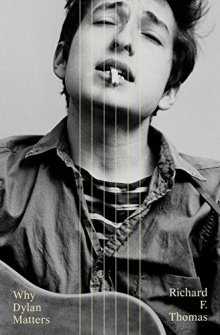
Then I read a review of Richard F. Thomas’s book Why Dylan Matters, and knew this was what I needed to read to make some amends for my decades of infidelity. Thomas is a Professor of Classics at Harvard; more than that, he has been a Dylan fan since pretty much forever. That’s ‘fan’ in the full sense of fanatic: he is a Dylan freak, an expert, a nerd. What he doesn’t know about Dylan, or doesn’t know how to find out, ain’t knowledge. The thesis of this fascinating book is that Dylan is a classic, just as much, and in just the same sense, as Virgil, Ovid, Catullus, Homer, Aeschylus and all those others are.

Our own favourite classicist Mary Beard agrees:

At last an expert classicist gets to grips with Bob Dylan. Richard Thomas takes us from Dylan’s high school Latin club to his haunting engagement with Ovid and Homer in recent albums. He carefully argues that Dylan’s poetry deserves comparison with Virgil’s — and Thomas, senior professor of Latin at Harvard and author of some of the most influential modern studies of Virgil, should know!

This book provides an oversight of some of the twists and turns of Dylan’s musical Odyssey — another good classical allusion — with a timeline-discography of all Dylan’s albums, a discussion of the broad outline of their development, and detailed analysis of the texts of many of the songs, and how they have changed in performance over the years. Because one of the great themes is that Dylan’s work is all about performance: in his Nobel Prize lecture he frequently made the point that Shakespeare was not interested in whether or not he was writing ‘literature’: his concern, like Dylan’s, was with the details of the performance. Getting everything right, so it was the best possible performance it could be.

The final chapter takes us through Dylan’s being awarded the Nobel Prize for Literature in 2016, “for having created new poetic expressions within the great American song tradition”. It’s not certain that all the details of what happened will ever be known. Dylan famously delayed for some time in responding to the Swedish Academy’s news of the award — perhaps because he couldn’t believe such an august body would really recognise his work as ‘literature’. Then he didn’t turn up in person to make his acceptance speech in Stockholm, asking the U.S. ambassador to Sweden to read it on his behalf. But he did — somewhat at the last minute — deliver the obligatory Nobel Prize lecture. Thomas describes it in his book, and you can listen to it on YouTube. It’s also touching to watch Patti Smith performing ‘A Hard Rain’s A-Gonna Fall’ at the ceremony. No doubt she was mortified by losing her way at one point, which she attributed to extreme nervousness, but she was warmly applauded and encouraged by the audience of the great and the good of the Nobel Prize.

It’s a book that I loved, a book that makes me want to go back to listening and listening to Dylan’s more recent albums, and a book that makes me want to read those ancient classics of Greek and Rome, either again or for the first time.

Addendum

I’ve created a playlist on Spotify which includes most of the songs Thomas discusses in this book. If you’d like to save yourself the trouble of searching for them all, you can find them here.

Montaigne and how to live

How to Live by Sarah Bakewell cover

I just love this book: I’m currently reading it for the second time; it gives me that kind of warm glow of comfort and pleasure, that makes you want to sigh “Aah” as you read it; I’ve marked and commented on so many passages throughout the book, smiled at many of the annotations I made the first time round, and added many more. Hey, I’ve even picked up my copy of Montaigne’s Essays and am trying again to actually read them.

The title and sub-title tell you exactly what’s between the covers: How to Live: A Life of Montaigne in one question and twenty attempts at an answer. Sarah Bakewell knows and loves Montaigne, and she delivers so much more than she promises. This isn’t just the life of Montaigne, but his after-life as well, as she tells the story of how Montaigne has been loved and hated, interpreted and misinterpreted, by readers in every century since his own. He was a hugely popular author from the first publication of the first edition of his Essays, yet the Roman Catholic Church placed it on the Index of Prohibited Books less than a hundred years later, where it remained for nearly two centuries until 1854. Descartes and Pascal, Diderot and Rousseau, George Sand, Flaubert, Nietzsche, T. S. Eliot and the Woolfs, Stefan Zweig: the list of writers and intellectuals who have been fascinated and attracted or repelled, but certainly, always, influenced by this modest 16th century French writer-philosopher, still goes on. And together with them, goes the crowd of ordinary, anonymous readers who have loved Montaigne and feel they know him as an intimate friend.

Just what is going on here? What’s this all about?

Michel Eyquem de Montaigne (1533-1592) was a French nobleman who in 1570 ‘retired’ from local politics and resolved that from then on he would write down his thoughts. About life, the universe, and everything; but chiefly about himself. He looked into his own heart and soul, and saw there the whole of humanity. His resulting Essays are a kind of ragbag of stories, drawn from his own life, from his wide reading of classical and contemporary authors, like the rambling conversation of one of your closest and most entertaining friends. And that’s what generations of readers have found: not just amusement and entertainment, but a mirror of their own souls also. Bernard Levin wrote, ‘I defy any reader of Montaigne not to put down the book at some point and say with incredulity, “How did he know all that about me?”’

So the Essays become something like the sea in e.e.cummings’s poem:

For whatever we lose(like a you or a me)
it’s always ourselves we find in the sea

Montaigne lived through the terrible and destructive civil wars of religion, which ravaged France between 1562 and 1598; a time of violent turmoil which makes even our own fear-filled times look peaceful. So his way of living and writing has something for us in our own troubled times: it speaks of how we can remain human, when the whole of society around us seems insanely intent on tearing itself to pieces. And what are these answers to the question, How to live?

Here’s just a selection of Sarah Bakewell’s twenty attempts at an answer:

  • Don’t worry about death
  • Pay attention
  • Read a lot, forget most of what you read, and be slow-witted
  • Question everything
  • Be convivial: live with others
  • Live temperately
  • Guard your humanity
  • Reflect on everything; regret nothing
  • Give up control
  • Be ordinary and imperfect

Montaigne has been described, e.g. by Brainpickings, as the godfather of blogging. That sounds fun, and maybe my ‘essays’ on this blog will be a way for me to explore thoughts in retirement, as Montaigne did.

And in the mean time, let me pick up my copy of his Essays again.

Leaving Alexandria

Leaving Alexandria, by Richard Holloway, is subtitled ‘A memoir of faith and doubt’. It is a timely book for me to be reading, at this time when I’ve recently retired, and am reflecting very much on my own ordained ministry: what did it mean? What was it all about?

Richard Holloway was born in a working class family, north of Glasgow. As a young teenager, he was persuaded by the local vicar to sing in the church choir, and there the beauty of holiness, the magic and mystery of Anglo-Catholic worship, captivated him. With little prospect of getting a good education through the local schools, let alone being able to gain a university place, he was encouraged at the age of 14 to go to Kelham Hall, at that time the home of the Society of the Sacred Mission, whose vision was to educate working class boys for ordination. Holloway never joined the Order, but he was drawn to its ethos of total commitment and self-sacrifice to Christ. (The founder of SSM, Herbert Kelly, used to say of the altar in Kelham’s chapel, “We sacrifice young men on this altar.”) For the whole of his life, Holloway felt both unable to give himself so totally to Christ, and at the same time guilty for being unable to do. His abiding feeling was of being “a disappointment”: to God, to his superiors, to the churches and congregations he served, to his wife and children.

His drivenness to become the best priest he could, led to some extraordinary works of ministry, in serving the homeless, the poor, the alcoholics and drunk addicts, AIDS sufferers, in parish after parish. Yet in spite of these ‘successes’ and heroic achievements, which led to his eventual call to be Bishop of Edinburgh, and Primus of the Scottish Episcopal Church, Holloway continued to feel he was a disappointment. He wrestled, too, to believe in God in the way his Anglo-Catholic background seemed to require. His belief in the place of human reason and experience led him to embrace the liberal theology of the 1960s, and the supposedly liberal agenda of women’s ordination and the full acceptance of LGBT people in the Church. This made him feel increasingly at odds with large sections of the Church, which regarded him as a dangerous liberal and heretic.

The last straw was the Lambeth Conference of 1998, the one that was hijacked by the more conservative, reactionary bishops of Africa and elsewhere, who forced through the infamous motions condemning homosexual practice and gay and lesbian people. Holloway knew that he could not continue to serve a Church which he believed had departed so far from the message of the Gospel. He had written a book called Godless Morality, which advocated conducting discussions on morality, without recourse to religious imperatives which could so easily be used without realism, reason or compassion. Many critics (including plenty who had not bothered to read beyond the title) condemned the book as heretical, including the then Archbishop of Canterbury. Since he was a guest of the Scottish Church at the time, Holloway was not the only person present who felt this was not only wrong, but also bad manners. The ABC had no business to be issuing what was effectively a fatwa against a fellow primate who was also his host.

Soon after this incident, Richard Holloway resigned from his position and retired, after famously throwing his bishop’s mitre into the River Thames.

This book is a fascinating memoir of one man’s experience of a lifetime’s ordained ministry in the latter half of the 20th century. It is honest, challenging, often laugh-out-loud funny. I think that anyone who has been involved in ordained ministry in the Church will recognise many of the questionings and wrestlings the author describes. It is also, at times, almost unbearably sad, as here when he describes his final sermon.

In the spring of 2000 I announced my resignation. At the end of October I preached my last sermon as Bishop of Edinburgh in Old St Paul’s, and I used it to look back. I told them that when I arrived as their Rector thirty-two years before I had just emerged from a period of radical doubt and had fallen into a very common trap. I reacted against my own uncertainty by attacking doubt and uncertainty in others. A closet sceptic, I condemned in others what I had been afraid to look at in myself. My first book, written in the attic at Lauder House thirty years ago, was an attack on the kind of theology I myself now wrote and was condemned for. It was the deepest irony of my life that I had ended up the kind of bishop in my sixties I had despised when I was a priest in my thirties. Now I had come back to where I started from and knew the place for the first time. I could no longer talk about God.

My heart goes out to a man who has made this decision. I am currently still presuming, or daring, to talk about God. But really, it’s with a growing fear and doubt: how can we speak about the Unspeakable, the Mystery beyond and behind all things? So much of human speaking about God amounts to little more than a blasphemous exaltation of the idols we set up and name as ‘God’. Usually with the principle motive of massaging our own egos, or shoring up our own power over others. Richard Holloway’s memoir challenges us and invites us to a more honest caution and modesty about what we take upon ourselves to say about God. Lest

“The Word made flesh is here made word again.”1Edwin Muir. I think. If you know the exact source, please let me know.