
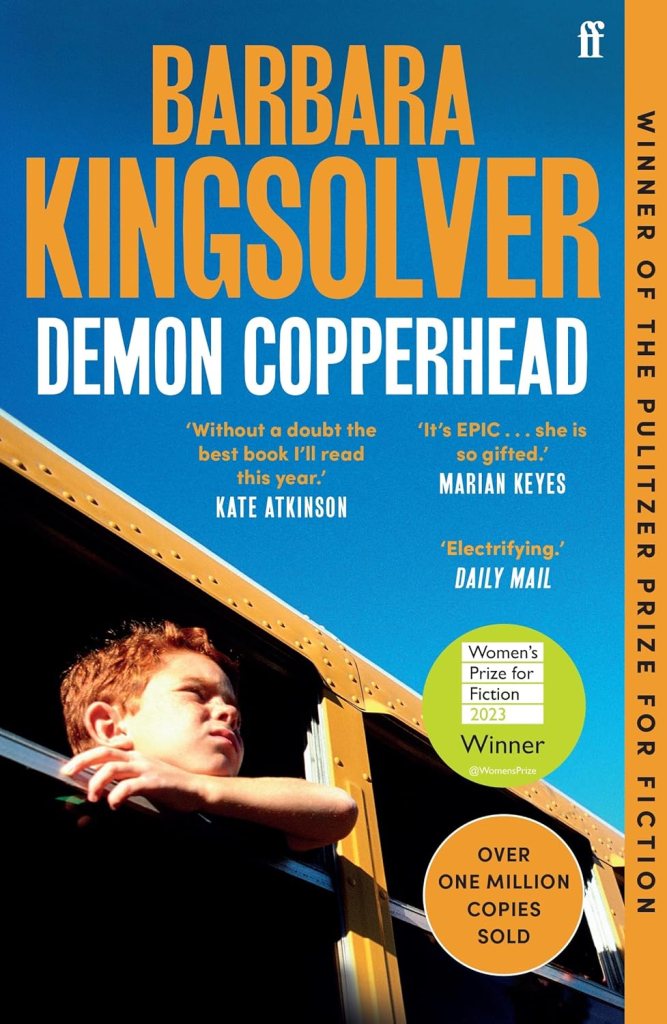
Barbara Kingsolver’s latest novel (2022 – but I’ve only just got around to buying a copy at the local Oxfam Bookshop) is a hard novel. An angry novel.
Hard, because it’s an unsparing account of generations of characters in Appalachia, West Virginia, living their lives in circumstances of poverty, familial and social breakdown, failures in social and medical care, educational inequality, and addiction to alcohol and drugs (especially opioids). The description of their hardships, pain, and suffering is relentless.
Angry, because all of them are victims of poverty, prejudice, and circumstances. All the risk-taking, the drug and substance abuse, are a desperate response to a life that so often seems impossibly hopeless.
The novel, famously (or notoriously?) is a reworking of Charles Dickens’s David Copperfield, another first-person narrative account of overcoming childhood poverty and neglect, to find a fulfilling artistic vocation and true love. It’s been a while since I read David Copperfield, so I needed some help from Wikipedia to identify many of the ways in which Kingsolver reworked the original in such a masterly way.
It did feel as if the long-lasting, painful misery of the addict would never resolve itself into the happy, hopeful ending I was looking for, and it was only in the last few chapters that it all worked out for Demon. Was David Copperfield’s happy ending similarly a last minute, with-one-mighty-bound outworking? I can’t remember, and will obviously have to reread it sometime soon.
But this was a good read. I recommend it.
 Godspelled