Man of the Borderlands

One of the things I do remember about that St Albans diocesan clergy conference in 1971, was one of the small discussion groups I was part of. One of the chapters in the book of preparatory reading, included the thought that, in order to engage with contemporary culture, Christians would need to be ‘people of the borderlands’, as Jesus was. Bridging the gap between people who were usually considered to be ‘in’, and those who were considered to be ‘out’.

I was taken with this idea. So much so that in between sessions I was inspired to write a poem about it. Not only that, but also to share that poem in the small group session. (I now think that was a bit bold, maybe presumptuous, for a brand new curate. But maybe I was too young to know better.) The poem:

God’s Debatable Lands

We all are people who fight shy of borders:
we want to life safe, deep in black, or white;
are creatures of light or darkness, fearing twilight.
Look how we build up fences against marauders,
miles, miles of wire that shout mankind’s disorders
in empty lands. There Love cannot alight —
it is a frightened bird flung into flight,
a beaten madman cringing from his warders.

Loving our brittle refuge better than God,
we shun his country, the Debatable Lands.
— But then, by brambly ways we never trod
there comes to us, with broken, bleeding hands
which hold out risk, and healing — not a rod —
our Jesus, Christ, the Man of the Borderlands.


You’ll notice, maybe, that it’s a sonnet. Malcolm Guite writes more of them. And better.
The Meaning of Life

[Just a taster of my #NaNoWriMo effort this year.]

How fortunate we are to live in times when, faced with difficult questions, we can turn to our digital friends and helpers.

Siri, what is the meaning of life?

“Try and be nice to people, avoid eating fat, read a good book every now and then, get some walking in, and try to live together in peace and harmony with people of all creeds and nations.”

OK Google, what is the meaning of life?

“The meaning of life, or the answer to the question: “What is the meaning of life?”, pertains to the significance of living or existence in general. Many other related questions include: “Why are we here?”, “What is life all about?”, or “What is the purpose of existence?” There have been a large number of proposed answers to these questions from many different cultural and ideological backgrounds. The search for life’s meaning has produced much philosophical, scientific, theological, and metaphysical speculation throughout history. Different people and cultures believe different things for the answer to this question…”

(Oh, come off it, Google, you’re just reading from Wikipedia!)

Alexa, what is the meaning of life?

“42”

(Make what you will of these differences between different operating systems, MacOS, Google and Amazon.)

But is it true that contemplating a thing – a blade of grass, a cockroach, a lover’s face – for long enough, will convince you that life has meaning? Without having read his book, I’m attracted by the story of Victor Frankl. He was a Holocaust concentration camp survivor, whose experience of some of the worst cruelty and brutality that has ever been inflicted by supposedly civilized human beings upon their fellows, led him to the conclusion that a person’s sanity and even survival in adversity, will depend on their ability to find meaning in their suffering. Man’s Quest for Meaning, he called his book, and with it he developed his concept of logotherapy. In contrast to Nietzsche’s will to power and Freud’s will to pleasure, Frankl bases his theory upon Kierkegaard’s will to meaning: that the primary, most powerful motivating and driving force in human life, is the need to find meaning. I’m guessing that whether it helps us survive or not, may depend on the value of the meaning we find. “Trying to live in harmony with other people” may work better than “42”. Just sayin’…

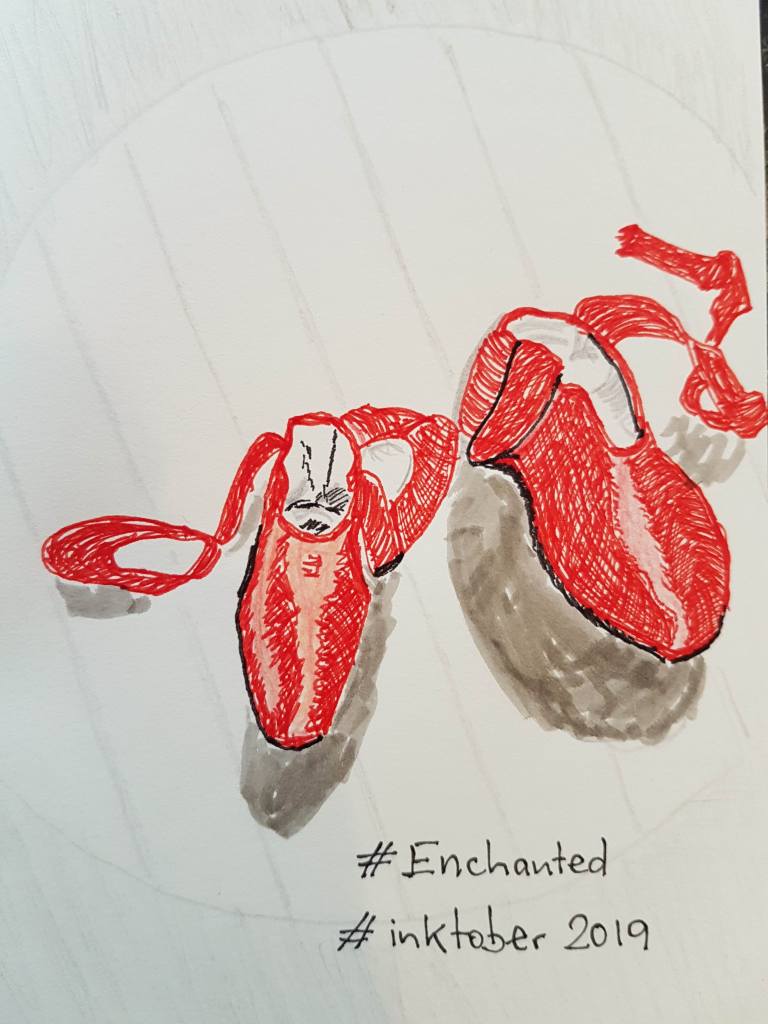
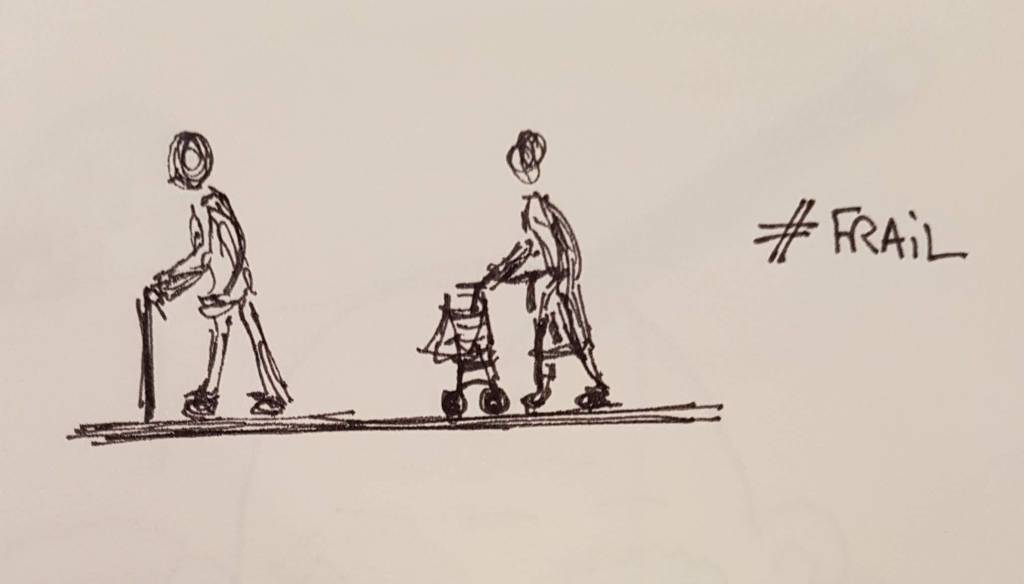
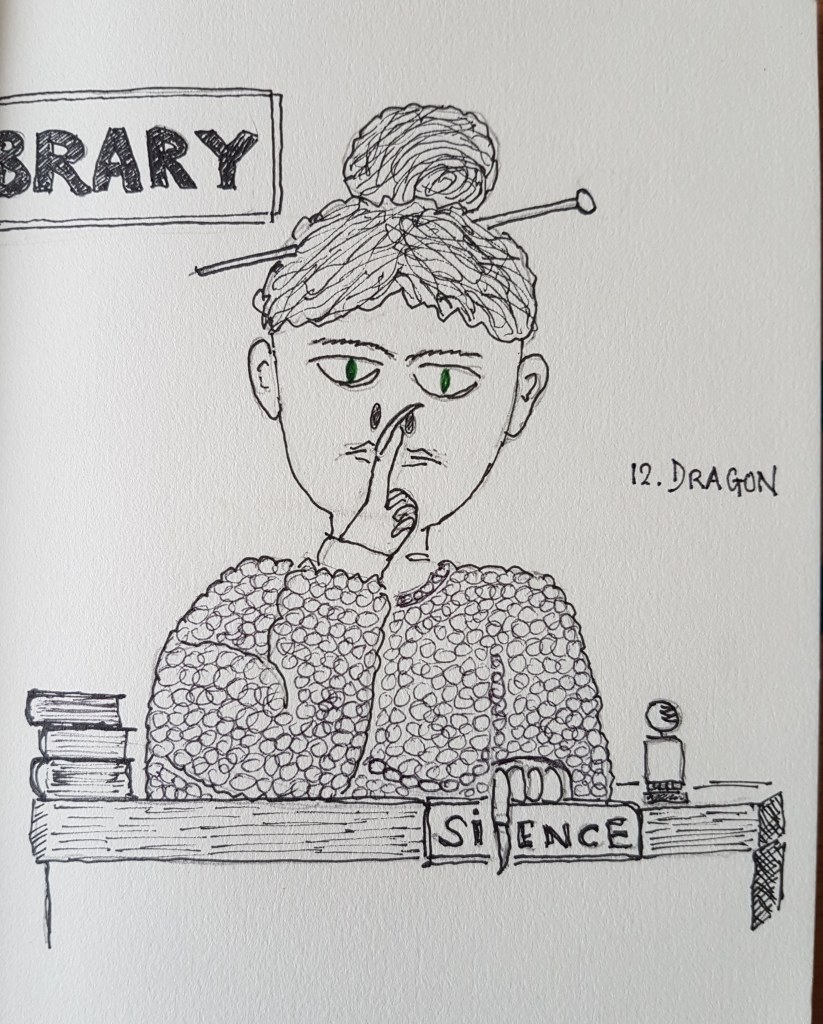
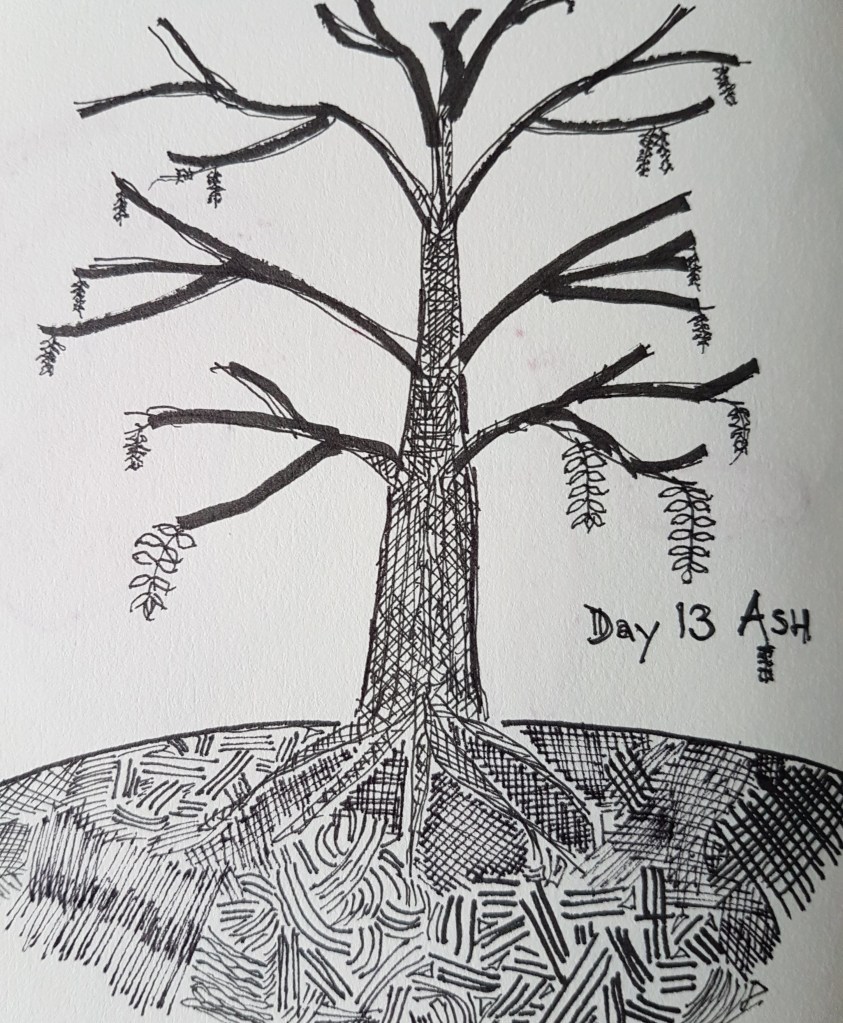
Doing #inktober

Some time in the middle of September, a friend drew my attention to Inktober. Said she was going to do it herself, “though I’m completely hopeless at drawing.” (Which turned out to be untrue.) Like her, I thought I wasn’t good at drawing, and haven’t done much, other than in the way of doodles, for a long long time. In the days when I still tried to make visual aids for use in preaching, I was invariably unhappy with the results. And yet. I always wished I could draw. Wanted to draw. Felt it would be a good thing to do. So I signed up for Inktober.

It’s not an arduous or difficult thing to do. Rather less than NaNoWriMo, where you are supposed to register with the site, and have to submit your 50,000 words of text at the end to have the total verified, in order to be a ‘winner’. With Inktober, it’s only you who check up on yourself. The challenge is to post a drawing on social media (doesn’t matter which) on every day of October. 31 days, 31 drawings. The official website says

Every October, artists all over the world take on the Inktober drawing challenge by doing one ink drawing a day the entire month.
I created Inktober in 2009 as a challenge to improve my inking skills and develop positive drawing habits. It has since grown into a worldwide endeavor with thousands of artists taking on the challenge every year.

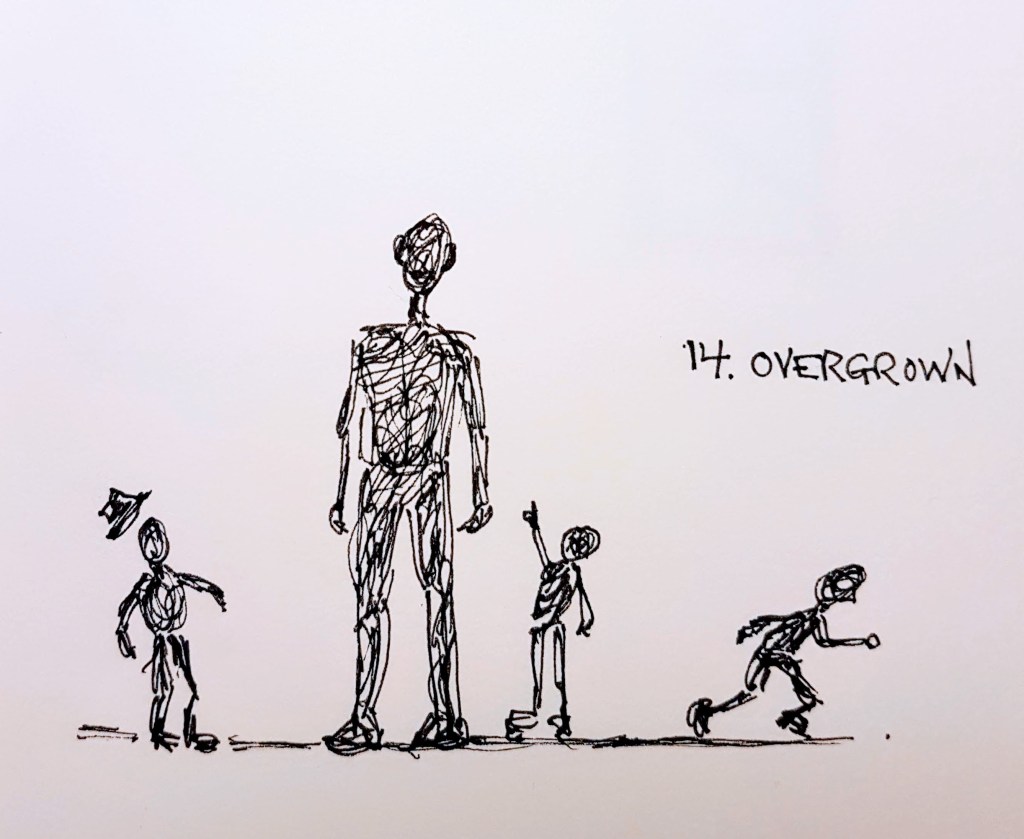
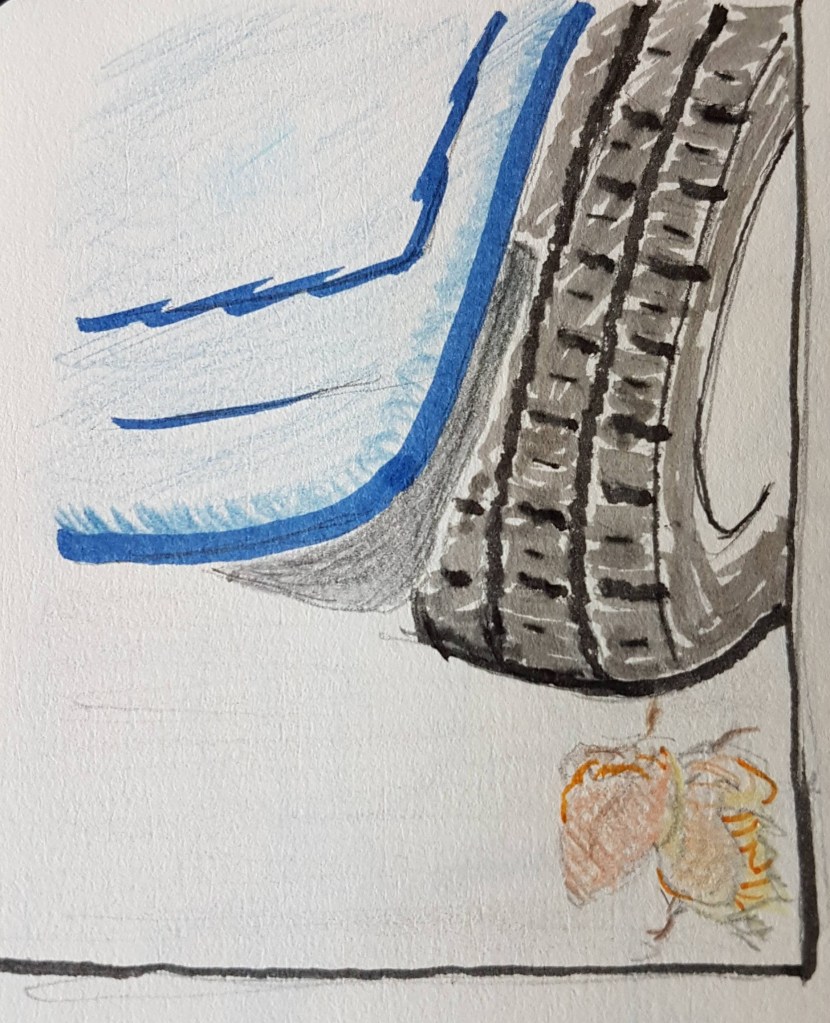
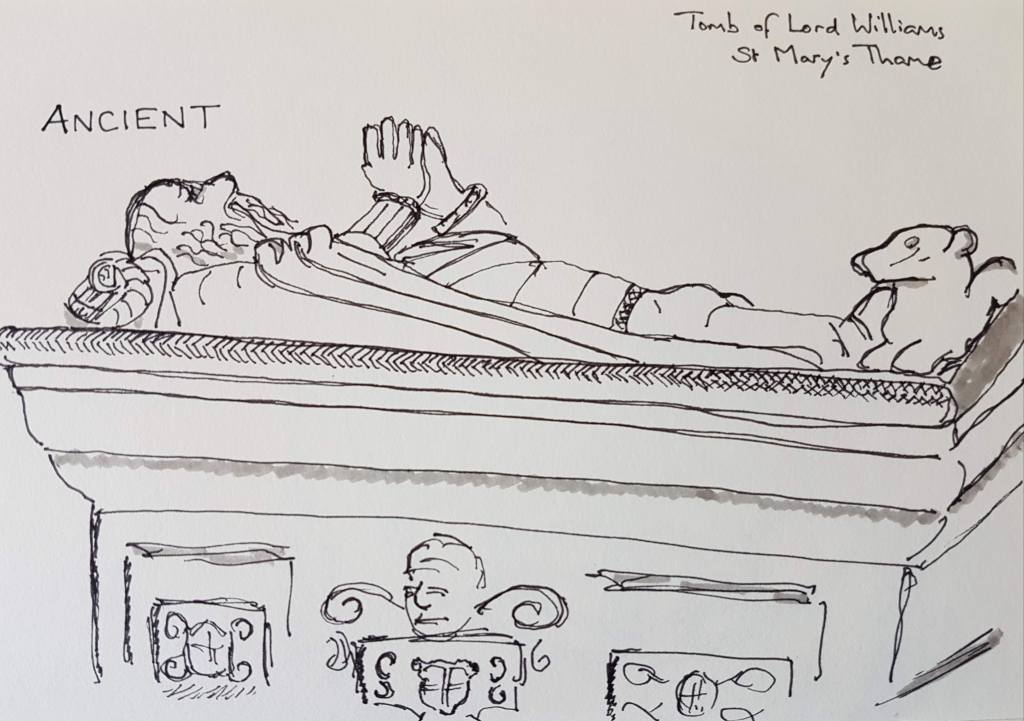
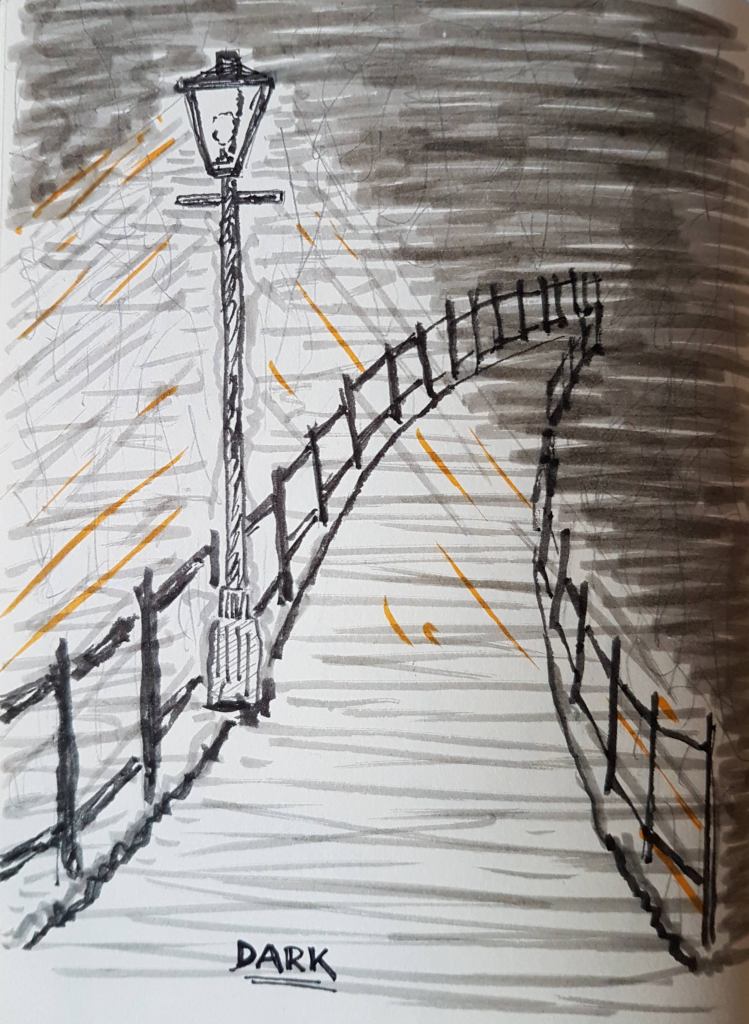
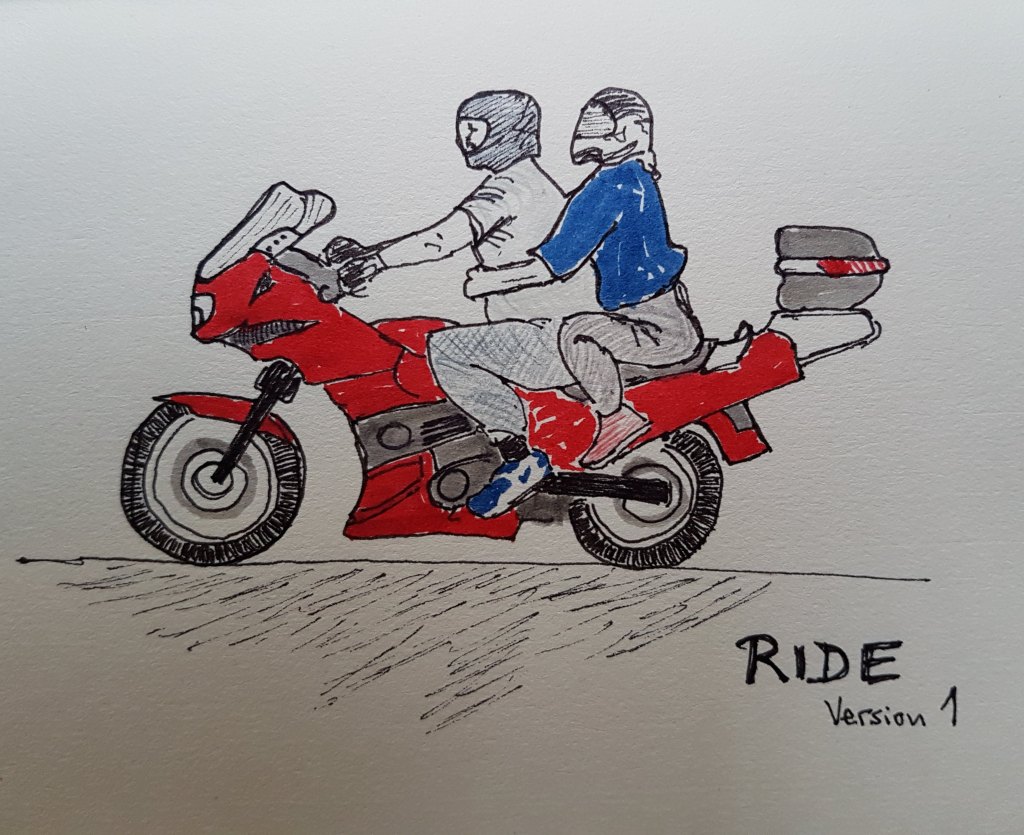
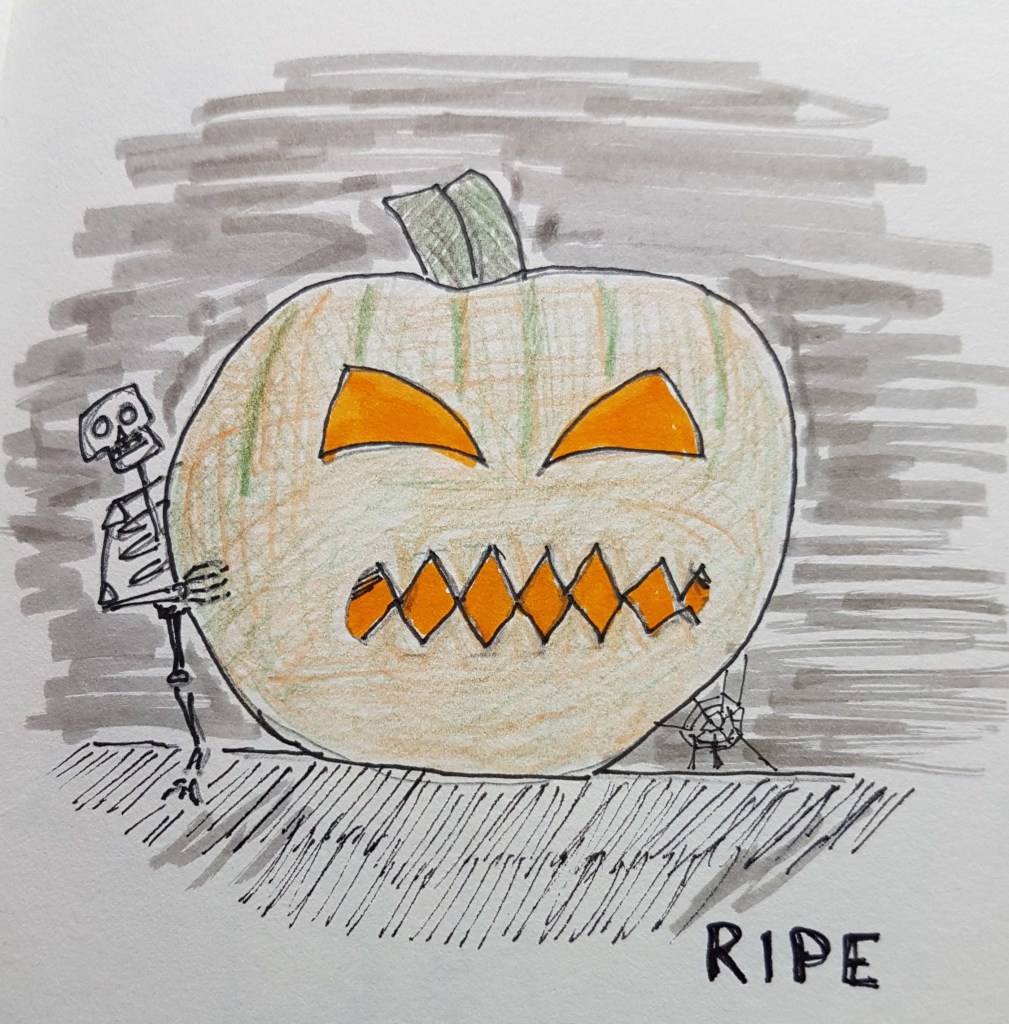
For those who want it, either because they lack inspiration (“But what can I draw?”) or because they want to make it more of a challenge, there is an official prompt list of single words to trigger creative thoughts. When I started, the prompt list was like unto a Zen koan to me, so that on the first two days I ignored the prompts and just posted two things I had felt like drawing. But then I got into the spirit of the thing – or perhaps the prompts got easier to understand – and I did my best to play the game. The prompts are broad and vague enough to have more than one meaning or interpretation, and that’s reflected in the different results the participating artists produce.

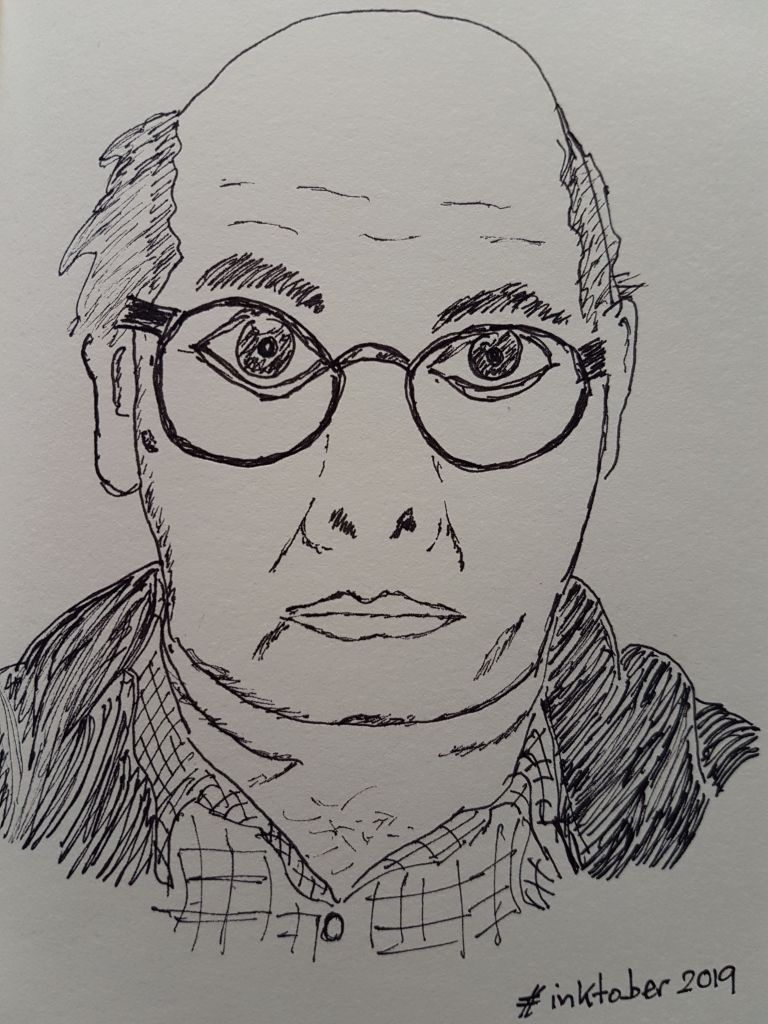
By now we’re just over halfway through. Most of my drawings have been done very quickly, very simply. I look at some of the pictures posted by others, and marvel at the intricacy, the detail, the time they must have spent on producing them. But it’s been immensely satisfying, and strangely addictive. I look back over three weeks, and I’m surprised by the variety of styles and methods I have used. And pleased with what feels like the progress I’ve made: my skills in some areas really seem to have improved. Is it annoying that my lightning sketches and throwaway attempts often look ‘better’ than the things I spend an hour on? Maybe. But it’s jolly interesting, too. It suggests that the more relaxed and loose I am about my drawing, the more fluent, the better the result.

I think I’m going to try and keep going, even when October ends.